




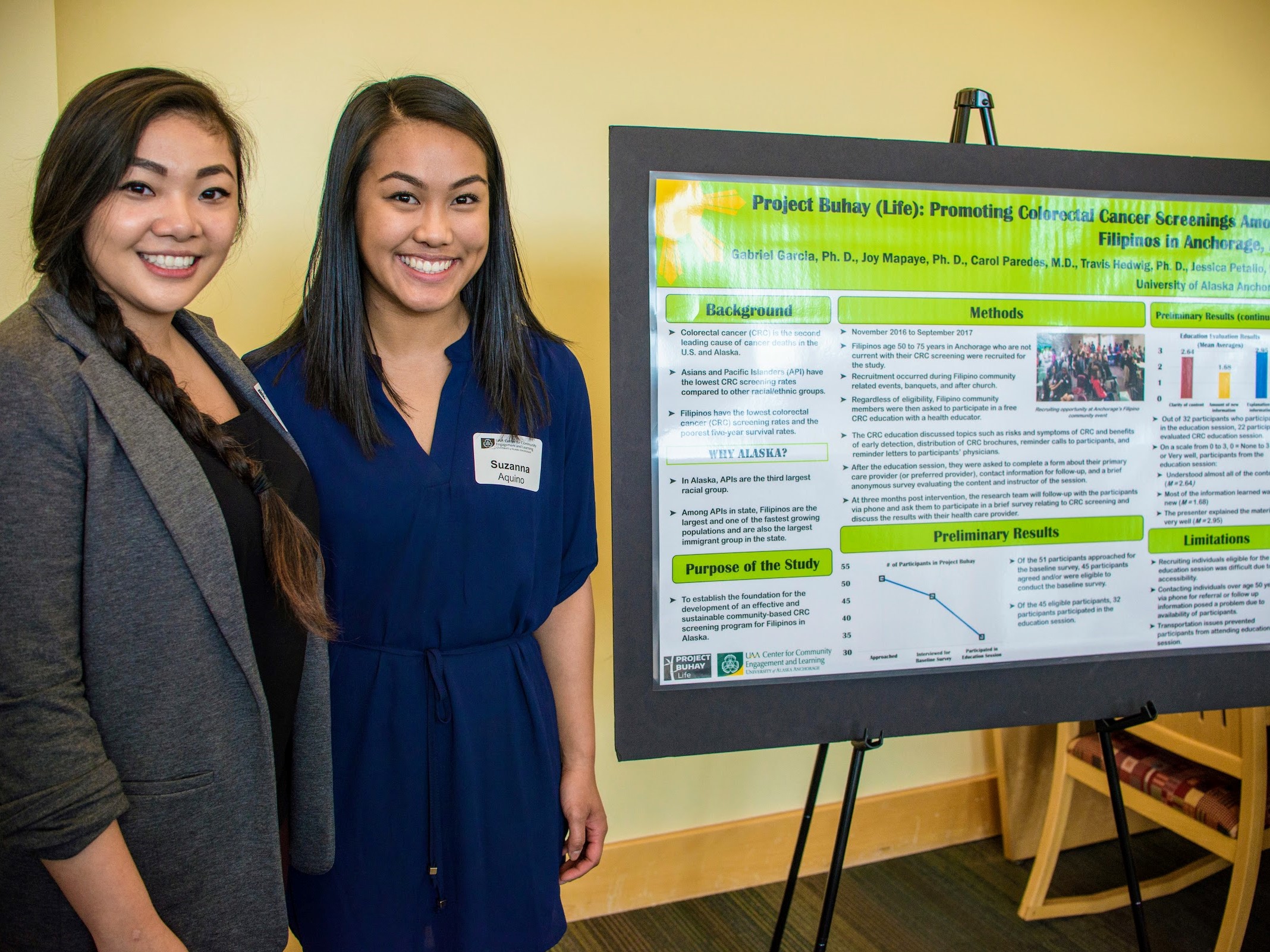
Get involved in your community through courses, scholarships, internships and awards
The Center for Community Engagement & Learning (CCEL), housed within Faculty Development and Instructional Support, serves as the intersection of student learning, faculty research and creative activity, and community engagement.
Since 2006, UAA has been recognized by the Carnegie Foundation for the Advancement of Teaching as a “Community Engaged Institution.” CCEL serves as a central locus for the intersection of student learning, faculty research, and community engagement. UAA uses the Carnegie Foundation's definition of community engagement for our work with communities: "Community Engagement describes the collaboration between institutions of higher education and their larger communities (local, regional/state, national, global) for the mutually beneficial exchange of knowledge and resources in a context of partnership and reciprocity."
Get involved in your community through courses, scholarships, internships and awards

Learn about CESAs and when the next round of applications open
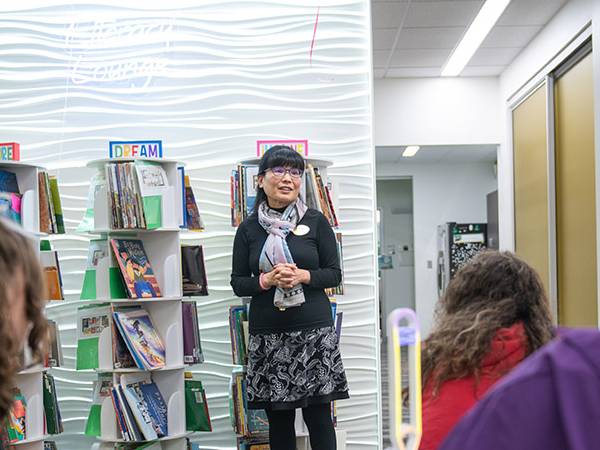
Learn about community engagement as a high impact practice

Learn about the Selkregg Award

See what's happening this year!

Support community engagement at UAA
Are you looking for ideas for your project or research? Interested in what projects
CCEL and community partners have done over the years?
Please take a moment to view our Community Engagement Partnership ePortfolio.
Email: uaa.ccel@alaska.edu
Facebook: https://www.facebook.com/uaaccel/
Instagram: https://www.instagram.com/uaa_ccel/
Twitter: https://twitter.com/uaaengage
Faculty Development & Instructional Support
Center for Advancing Faculty Excellence, Academic Innovations & eLearning, and Center
for Community Engagement and Learning
Library 213 • 907-786-4496 • uaa_cafe@alaska.edu • Monday – Friday, 8 a.m. – 5 p.m.