Radiologic technologists are important health care professionals who specialize in
radiographic procedures and exams, helping physicians diagnose and treat diseases
and injuries.
The Radiologic Technology program prepares students to become entry-level radiologic
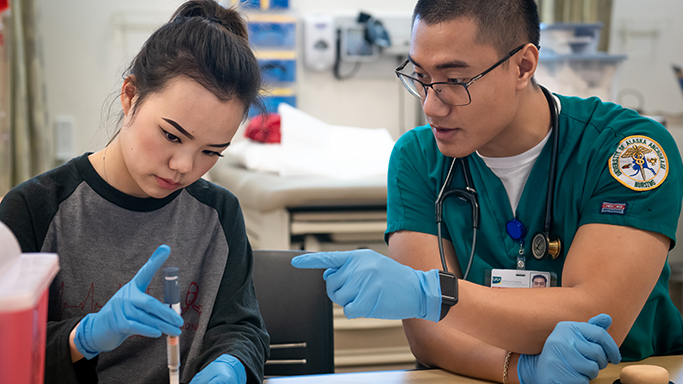
technologists. Students develop technical skills in diagnostic imaging through classroom
instruction, lab demonstrations, and clinical application—all with a focus on real-world
experience.
The primary role of the radiographer is to provide diagnostic images of the structure
and function of anatomy to assist the physician in the treatment of injury and disease.
Graduates are prepared with the technical skills necessary to perform a variety of
diagnostic radiographic examinations. Examples of examinations performed include chest,
upper and lower extremities, spine, ribs, skull, gastrointestinal, genitourinary,
and reproductive systems.
The UAA Radiologic Technology Program is an Associate of Applied Science degree program
and is delivered to select Alaska communities throughout the state. Students who apply
to a distance site must follow the same admissions process as those students applying
to the Anchorage campus, including being admitted to the University of Alaska Anchorage
as a degree-seeking student. Students who are accepted at a distance site attend classes
on UA campuses in those communities through video conferencing. Distances students
are required to attend an entire clinical practicum in Anchorage.
The admittance process is competitive and completion of the admission requirements
does not guarantee selection into the Radiologic Technology full-major program. Upon
selection into the full-major program, students will be required to complete five
(5) semesters of radiologic technology coursework. For full application instructions,
please review the program application procedure information.
The newest iteration of the Della Keats Health Sciences Program focuses on serving Alaska Native/American Indian high school students interested in healthcare careers.
Lynn Troyer, an academic advisor for the School of Nursing at the University of Alaska Anchorage, traveled to Bethel as part of the Alaska-Rural Community Overdose Response Project (AK-RCORP).
Recently, on November 7, the UAA College of Health’s Interprofessional Education (IPE) Committee launched its 2025–2026 event series with a session focused on “A Lived Experience with Disabilities.”
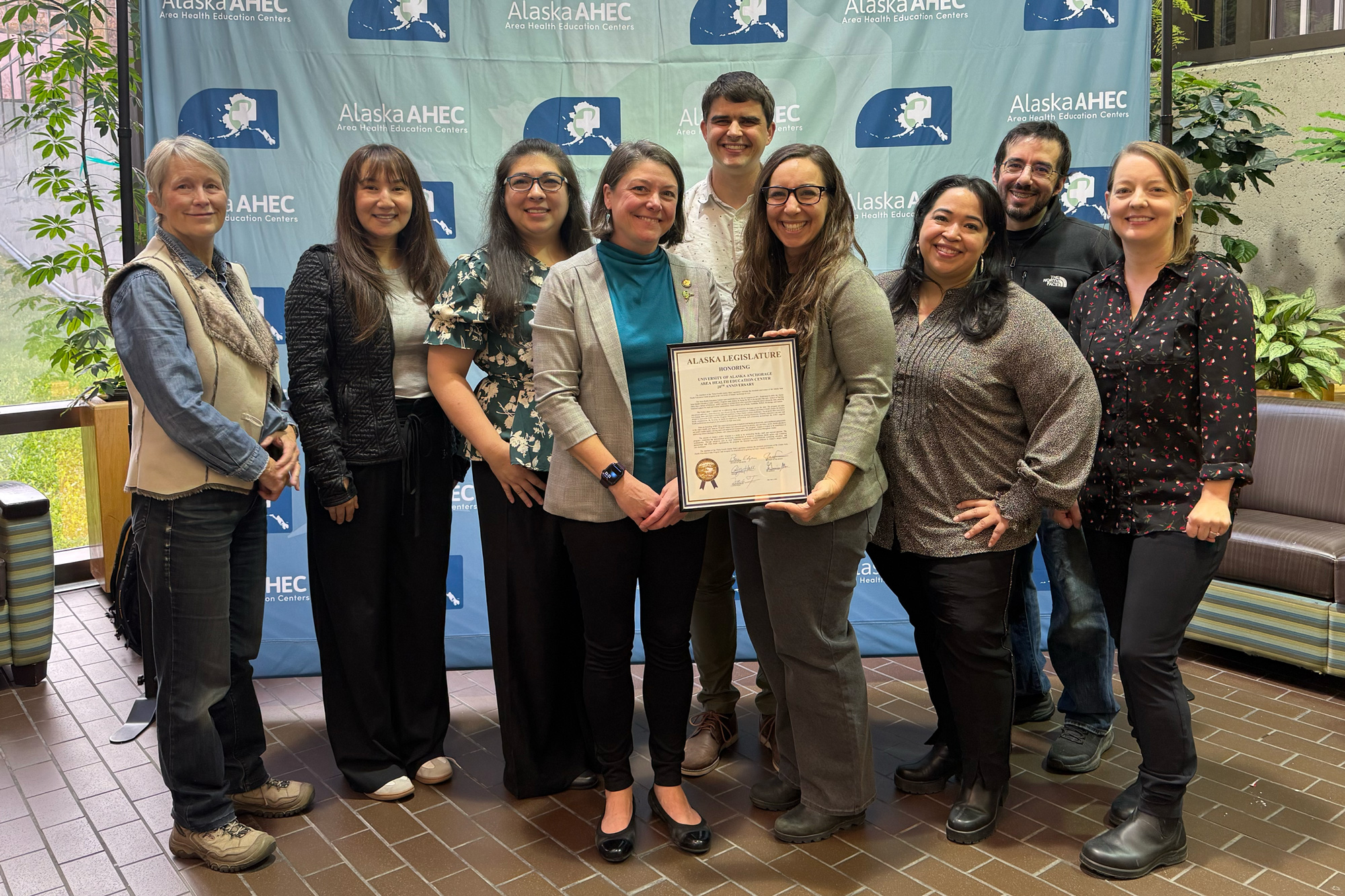
Oct. 3, 2025, was a big day for the Alaska Area Health Education Center (AHEC), which is proudly housed within the UAA College of Health! AHEC marked its 20th anniversary with a special legislative citation from the Alaska State Legislature—a well-deserved recognition for two decades of crucial work.