

UAA Online Bookstore and Seawolf Store
Ordering Textbooks is Completely Online
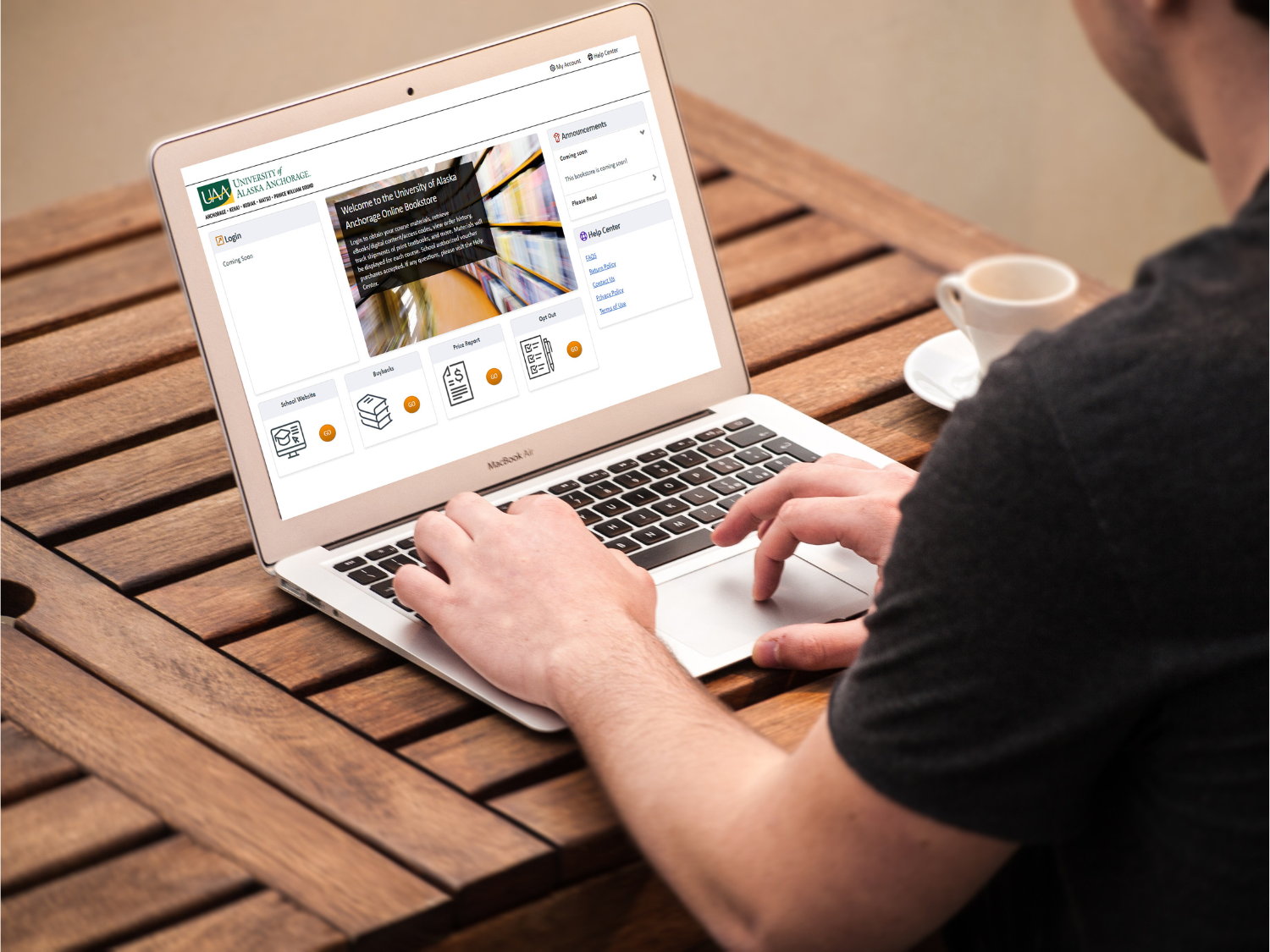
UAA launched a NEW online bookstore for Fall 2023.
The new online bookstore, launched for Fall 2023, was created in partnership with Ambassador Education Solutions. At the online bookstore students will find an easy, affordable, and hassle-free shopping experience. Students automatically connect to their personalized lists of course materials where they can find, compare, and order items anytime, anywhere from their computers or mobile devices, including new and use textbooks, digital materials, rentals, supplies, kits, and more. At the online bookstore, students will be able to find and order books for all UAA campuses (Anchorage, Mat-Su College, Kenai Peninsula College, Kodiak College, and Prince William Sound College).
Important Dates
| Date | Deadline |
| December 5 | Price report available |
| December 12 | Bookstore open for Spring 2024 orders |
| December 12 | Free ship-to-campus open |
| December 27 | Free ship-to-campus closed |
| January 10 | Pick up orders shipped to campus |
| February 2 | Inclusive access opt out deadline |
| April 15 | Textbook buyback open |
| May 12 | Textbook buyback closed |
| Date | Deadline |
| March 11 | Summer 2024 price report available |
| March 25 | Bookstore open for Summer 2024 orders |
| March 25 | Free ship-to-campus open |
| March 25 | Student account charges open |
| May 7 | Free ship-to-campus closed |
| May 26 | Student account charges close |
| July 19 | Textbook buyback opens |
| August 3 | Bookstore closed for Summer 2024 orders |
| August 17 | Textbook rentals due |
| August 17 | Textbook buyback closed |
| Date | Deadline |
| May 6 | Fall 2024 price report available |
| July 1 | Bookstore open for Fall 2024 orders |
| July 1 | Free ship-to-campus open |
| August 8 | Student account charges open |
| August 14 | Free ship-to-campus closed |
| September 14 | Student account charges closed |
| November 24 | Textbook buyback opens |
| December 1 | Bookstore closed for Fall 2024 orders |
| December 22 | Textbook buyback closed |
| December 28 | Textbook rentals due |
Contact Us
How Does it Work?
Login with your UA username and password to view a personalized, easy-to-use page with all your UAA courses, required materials, and pricing options.
- Online Bookstore Offers
- A quick and intuitive ordering process - complete your purchase in 5 minutes!
- Options for all course materials, including new and used textbooks, eBooks, rentals, supplies, kits and more.
- The online bookstore serves all of UAA campuses (Anchorage, Mat-Su College, Kenai Peninsula College, Kodiak College, and Prince William Sound College), you can get all your books with one order.
- Free shipping to your campus during the posted dates. After the free shipping period, you can still ship to campus for a fee.
- Expert customer service with added support at the beginning of every term.
- Flexible payment options, including the ability to charge your course materials to your student account. Please remember that all charges must be paid by the payment deadline and is subject to the same late fees as tuition, fees, and housing. See Paying For Your Course Materials below for more details.
- Disability Support ServicesStudents registered with Disability Support Services who need a physical format textbook as a reasonable accommodation should contact Disability Support Services.
Frequently Asked Questions
- Help CenterYou can contact Ambassador Education Solutions (bookstore vendor) customer service team's Help Center
- UAA Online Bookstore - Anchorage LiaisonEmail uaa_text@alaska.edu or call 907-786-0688. We are available Monday through Friday from 9:00 am to 5:00 pm
- UAA Online Bookstore - Student Account ChargesEmail uaa_bookstoreaccount@alaska.edu for bookstore-related student account questions
- Troubleshooting Bookstore Login
-
Log into your UA Microsoft account at https://portal.office.com with your UA email address (UAusername@alaska.edu) and UA password.
-
If going to that link automatically signs you into a non-UA personal account, sign out of it on the top right by clicking your profile picture, then try the link again. Alternatively, you can also clear your browser's data and cache instead.
-
If you forgot your UA password or need to change it, then go to https://me.uaa.alaska.edu.
-
If your UA password works everywhere else (i.e. UAOnline, Blackboard, UA Gmail, etc) besides https://portal.office.com, then go to https://me.uaa.alaska.edu and change your password. This will force a password sync to Microsoft's servers.
-
After changing your password, please wait 30-45 minutes for the password to sync to Microsoft's servers.
-
Once you're signed into your UA Microsoft account, go to the UAA Bookstore link here: https://uaa.
uofalaskabookstore.com/
This should let you into the UAA Bookstore. If not, then please contact UAA Technical Support Center at 907-786-4646 for further login assistance.
-
- Returns
- Returns:
- Login to your bookstore account
- Click "My Account" in the top navigation
- Find your order on the Order History tab
- Scroll to the bottom of the order and click on the "Return Items From This Order" button
- Visit the Frequently Asked Questions for more details and the Return Policy
- Returns:
Seawolf Store
For t-shirts, hoodies, hats, and other UAA gear, as well as gifts and school supplies including Alaska books, nursing scrubs, and lab gear, visit the Seawolf Store online or on-campus.
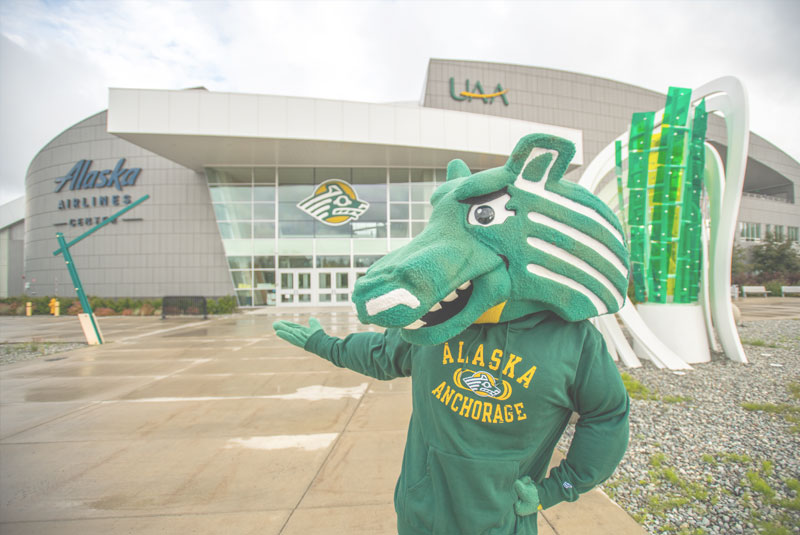
The Seawolf Store is inside the Alaska Airlines Center at 3550 Providence Drive, Anchorage AK 99508. View our store hours here.
For questions about UAA and Seawolf gear, please call us at 907-786-1194 or email us at uaa_merchandise@alaska.edu