


Human Performance Lab (HPL)
| |
AppointmentsTesting is offered by appointment. To schedule single or multiple tests, call 907-786-4083. All testing is completed in the Human Performance Lab in Eugene Short Hall, Room 102 on the main UAA campus.Questions and correspondence should be addressed to the Department of Health, Physical Education & Recreation (HPER), uaa_hper@uaa.alaska.edu. Include "Lab" in the subject line.
Loading slide show...
|
ImportantPlease fill out the Health History Screening Form and Medical Clearance Form*, save to your computersend copy of doc/file as an attachment to uaa_hper@uaa.alaska.edu.
Additional pre-test information and confirmation will be sent to you after scheduling your appointment. Please follow the pre-test instructions closely as doing so will improve the effectiveness of the testing. *You only need the Medical Clearance Form if the Health History Screening Form indicates you should consult your physician. |
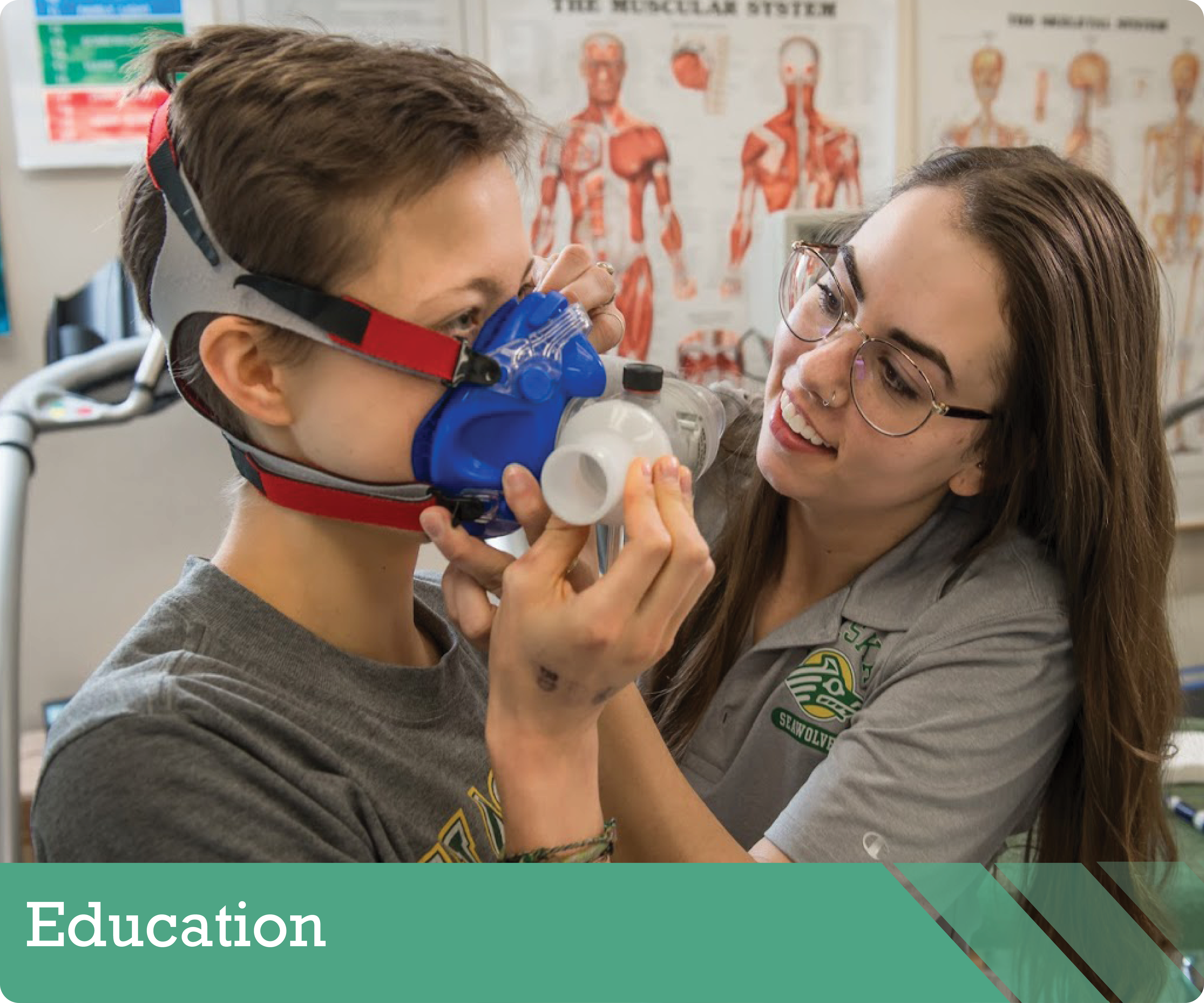
Services OfferedClients must be "apparently healthy" and meet the American College of Sports Medicine (ACSM) Risk Stratification criteria of Low Risk for a max test or of Moderate Risk for submax test. A physician's medical clearance may be provided for authorization in some instances. All clients must complete and submit the following forms prior to their testing day: a health history, medical clearance (if Moderate Risk), and Informed Consent (provided at time of test). No one with a risk stratification of High Risk will be allowed to be assessed in the Human Performance Lab. We regret not being able to provide the cardiorespiratory testing to this population though they may indicate higher performance capacities than some of lower risk. In all cases we encourage checking with your physician prior to testing and exercise training.Note: At the start of your appointment we will complete remaining paperwork and briefly review test procedures. Our lab provides high quality performance testing and a detailed summary report of results, thus allowing the client or client's coach/trainer to use the data to determine appropriate training. We do not provide coaching services or develop training plans. Testing can provide valuable data on your current fitness level, as well as how effective you are responding to your training plan. By conducting regular tests (depending on your sport and season) you can accurately monitor the results of training adaptations and make adjustments accordingly to maximize your health and performance. Our cardiorespiratory tests are conducted on a treadmill, rowing ergometer, arm ergometer, bike ergometer or cycling on a Computrainer (HPL bike* or client's bike). Test options include VO2Max, Metabolic Efficiency, or Cardiorespiratory Fitness (CRF) submax tests. When testing VO2Max or Metabolic Efficiency, the client is fitted with a heart rate monitor, comfortable breathing mask or mouthpiece, and light headgear. The breathing mask is attached to a metabolic analyzer (Parvo Medics True 2400) that will read ventilatory values and oxygen and carbon dioxide concentration of the inhaled and exhaled air. The Submax fitness test does not include the use of the Metabolic Analyzer and blood pressure monitoring. *Trek road bike 56 cm (large) or 52 cm (small). Human Performance Lab Tests Available
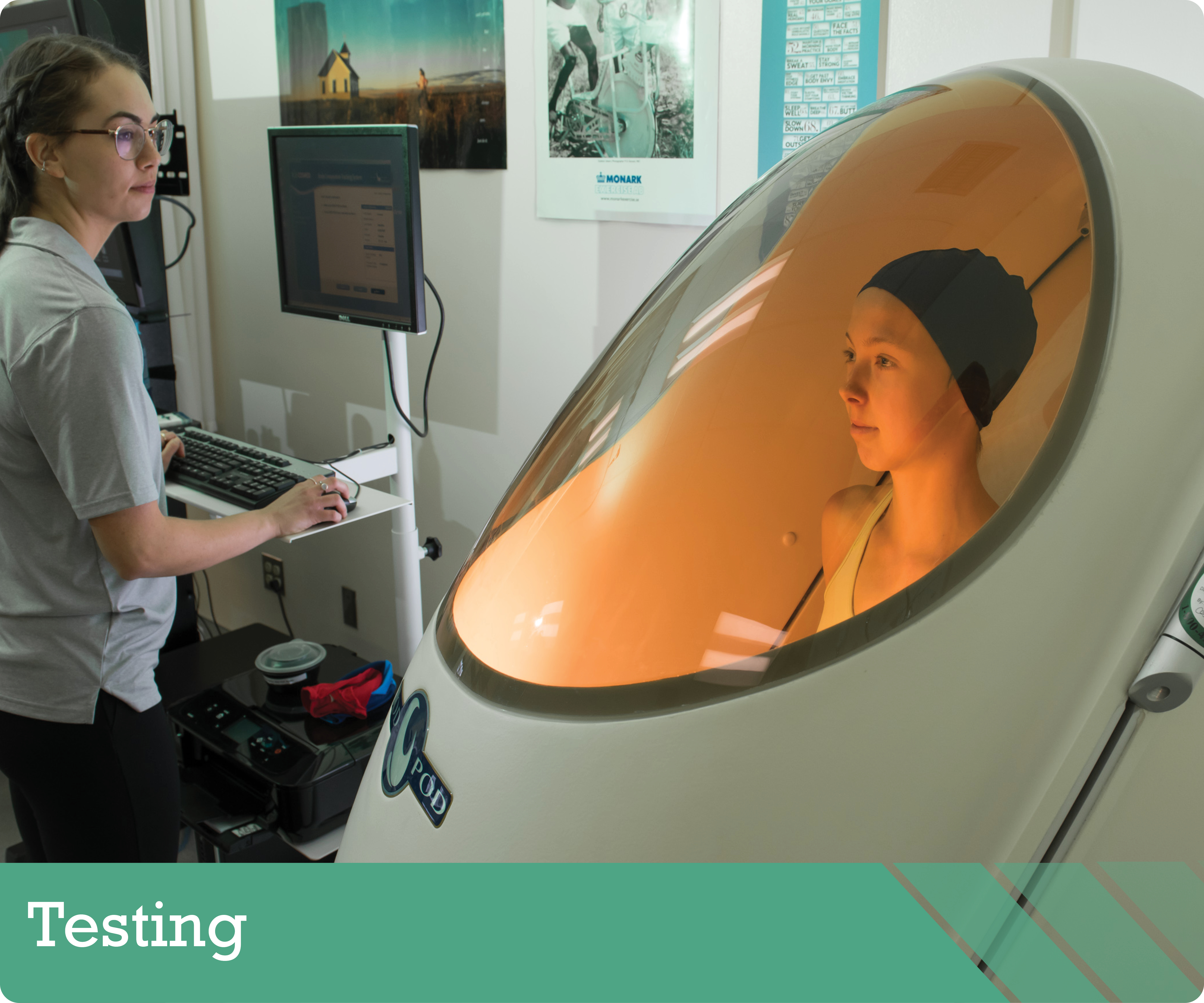
VO2 Max Test - 90 minutesVO2 (volume of oxygen) Max Test is considered the best measurement of cardiorespiratory fitness. It determines your maximum aerobic capacity, the body's ability to transport and utilize oxygen during exercise. A very high level of physical exertion is required to conduct this test. The protocol for the VO2 max test starts with a warm-up stage then every three minutes the stage will increase in intensity (speed, incline and/or resistance). Data is gathered during each progressive stage. Upon reaching the maximum heart rate and/or peak values the exercise stages are stopped and the client cools-down for a period of time while additional data is gathered. Bruce Protocol Chart Cost: see Fee Chart Data collected: VO2, VCO2, HR, grade, speed or watts, RER (respiratory exchange ratio), RPE (rate of perceived exertion), metabolic parameters (calories, carbs, fat) The Parvo Medic TruOne metabolic monitor is used in the UAA Human Performance Lab. This metabolic cart is used at NASA, USOC (US Olympic Center), Cooper Institute, and many universities. The Parvo is one of the most accurate devices made. CRF Submax Test – 60 minutesThe Cardiovascular Respiratory Fitness (CRF) Submax Test follows a similar protocol as the VO2 Max but the test is terminated at approximately 85% of the client’s predicted maximum capacity (determined by heart rate). This is a less invasive test (without use of the metabolic analyzer) and provides data to determine appropriate training zones. The submax exercise test can be used to estimate maximal VO2. Metabolic Analyer is not used with these tests. Cost: see Fee Chart Data collected: HR, grade, speed or watts, RPE (rate of perceived exertion), and blood pressure. Metabolic Efficiency Point Test – 120 minutesIdeal test to determine how much carbohydrate and fat is burned during aerobic exercise, as well as what proportion of these fuels your muscles prefer per stage (workload) using metabolic monitor measurements gathered from expired air. The Metabolic Efficiency Point Test is divided into 2 protocols depending on performance goals and training period. Either protocol is considered a submax test. The base or off season protocol is geared towards detecting your fuel utilization (carbohydrate and fat burning ratios) at various intensities/workloads determined by HR, watts or speed and RPE. This data is vital to adjusting macronutrient composition of your daily diet as well as fuel intake surrounding training. The competition season protocol is geared toward detecting your fuel utilization at your self-selected race pace, knowing carbohydrate and fat utilization and how much of each fuel will provide valuable data for race day nutrition needs. The metabolic analyzer and accessory equipment is used with these tests. Cost: see Fee Chart Data Collected: VO2, VCO2, HR, grade, speed or watts, RER (respiratory exchange ratio), RPE (rate of perceived exertion), metabolic parameters (calories, carbs, fat) Metabolic Test: Resting Metabolic Rate (RMR) – 45 minutesThe Metabolic Test provides an insight into TDEE (total daily energy expenditure). The resting metabolic rate (RMR) is a measurement of the energy you burn each day for basic living functions. This test is highly accurate and uses the same technology utilized in hospitals to determine the amount of fat and carbohydrate you are burning (% fat, % carb, and grams) using the Parvo Medic TrueOne Metabolic Analyzer. Testing is done in a fasted state while in a relaxed supine position for 30 minutes. This test includes the metabolic analyzer to measure oxygen and carbon dioxide gas exchange, which requires wearing a breathing mask and light headgear. Cost: see Fee Chart Data collected: RMR, resting lactate, resting glucose, resting HR, RER (respiratory exchange ratio), metabolic parameters (calories, carbs (%, grams), fat (%, grams) Lactate Threshold (LT) Test (without metabolic analyzer) - 60-90 minutesLactate levels are highly correlated with performance and often used to determine training zones. The lactate threshold is the maximal intensity that one can maintain for a period of time without tipping that balance between production and clearance of lactate in the blood. Once tipped, muscle fatigue will ensue. Cost: see Fee Chart The test is conducted on a treadmill, rowing ergometer or bike (HPL or client). Protocol includes step minute stages of progressive workloads with blood lactate collection (finger or earlobe pinprick) at rest, end of each successive stage and during recovery. We recommend the test be completed during a recovery period to minimize effects from overall training fatigue. This test may be combined with the VO2 Max or Metabolic Efficiency tests utilizing the metabolic analyzer for additional fee. Data collected: Blood lactate (mmol/L), HR, speed or watts, RPE (rate of perceived exertion) Wingate Anaerobic Test - 30 minutesThis anaerobic test can determine a participant's peak anaerobic power, mean anaerobic power, total work, and fatigue index. A high intensity "supramaximal" test, the Wingate Test protocol includes a maximal effort by the participant for 30 seconds on a bicycle ergometer. Rowers may use a modified protocol on the rowing ergometer. Cost: see Fee Chart Data is collected to determine anaerobic fitness. Hydration Test (Urine Specific Gravity) - 5 minutesHydration is vital for optimal performance and health. Urine specific gravity measures the density (concentration) of a urine sample and provides a value to rate hydration status. A small urine (USG) sample is collected at the time of your appointment then measured by a refractometer (hand held device) with results displayed within seconds. Typically, this test is added along with other performance tests. Cost: see Fee Chart Data collected: USG value between 1.005-1.060 Body Composition - BOD POD® - 15-30 minutes
| |
Human Performance Lab