



Ice Age cooking? Archaeology at the Carpenter Site
by Keenan James Britt |
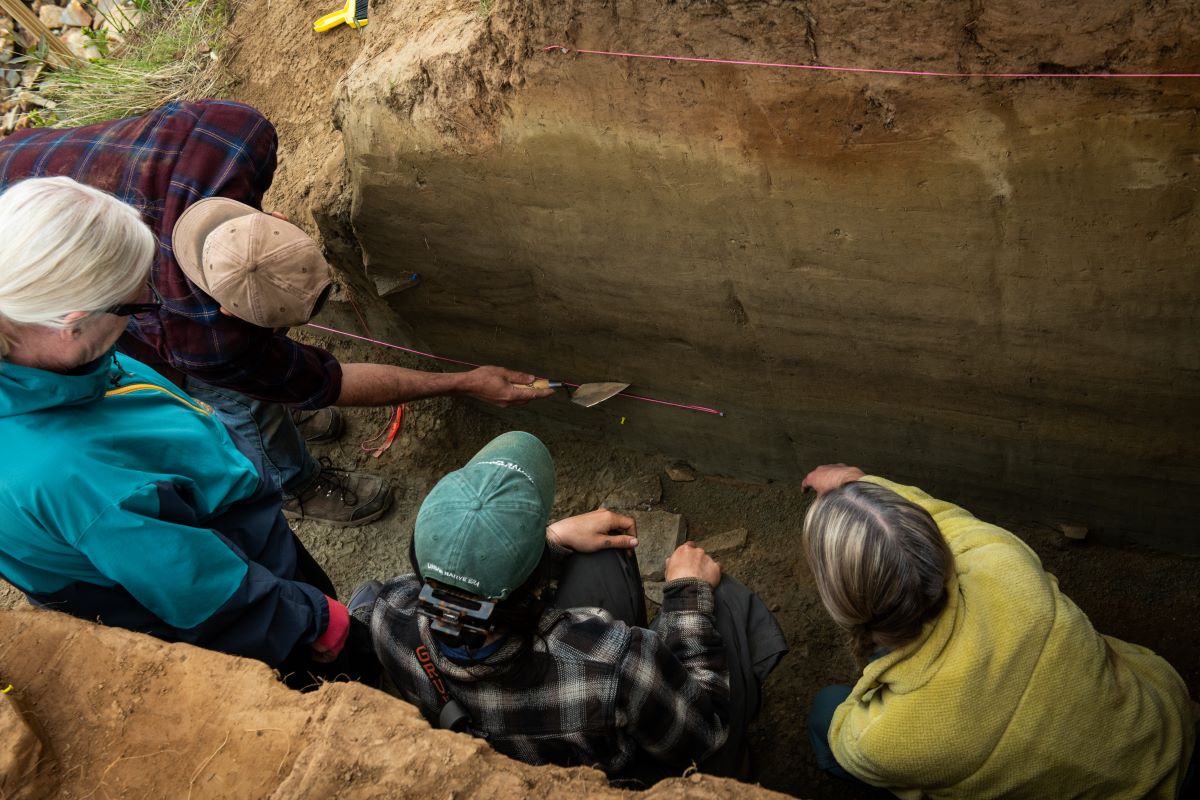
This summer, a group of 12 UAA students and volunteers participated in an archaeological excavation at the Carpenter Site as part of a field school led by Gerad Smith, Ph.D., assistant professor of anthropology. The Carpenter Site, which is located on a bluff near Shaw Creek, about a half-hour drive from Delta Junction, is also known as “Naayii'ęę'” in the Middle Tanana Dene language, meaning “it is visible across.”
During the field school, which ran from May 19 to June 21, the team excavated through 13,000 years’ worth of accumulated sediment at the site. Starting at the surface and digging through progressively older stratigraphic layers until they reached bedrock, the students at the site uncovered artifacts like three tin cans with a possible connection to an early 20th century roadhouse that operated at the site and stone tools made centuries earlier by ancestral Dene people.
The lowest layers of the site date from 13,000 to 12,000 years ago, during the late Pleistocene epoch — a time period more commonly known as the last “Ice Age.” The discoveries made in these lower layers provide fascinating clues to what life was like in the area during the Ice Age, as well as valuable experience for the student archaeologists.
A 12,000-year-old bone
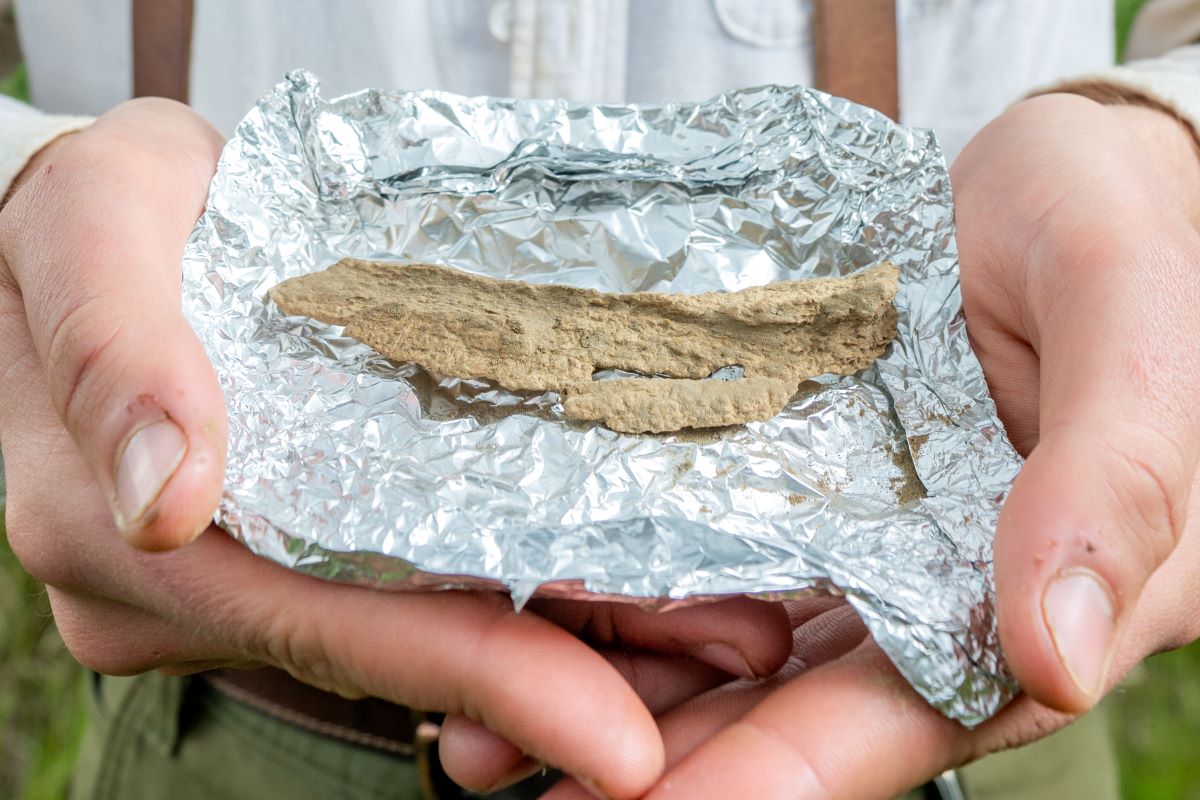
Caiden Mitchell, a sophomore in anthropology and history, found the bone while excavating at the site. According to Mitchell, the artifact is a “long bone from some sort of late Ice Age ungulate.” The ungulates are a large group of related species of hooved mammals. Mitchell believes the bone is likely from an elk (or “wapiti”), a species of ungulate. While the wild elk in the state today were reintroduced by humans in the 20th century, a native population of elk lived in Alaska during the Pleistocene.
“I found this in the stratigraphic soil, estimated about 12,000 years ago,” said Mitchell, explaining the context of the find. “Immediately around this, there was evidence for fires and hearth complexes, with fire-cracked rocks and staining consistent with charcoal deposits and hearths.”
“Fire-cracked rocks” are a special type of artifact; these artifacts are rocks that have broken apart due to heating and cooling. They are often found around ancient hearth sites, and can be evidence of cooking. The fire-cracked rocks and soil staining found around the bone may suggest that it was part of someone’s meal 12,000 years ago. “The bone itself does not show marks of cooking, but the soil immediately surrounding it does,” explained Mitchell.
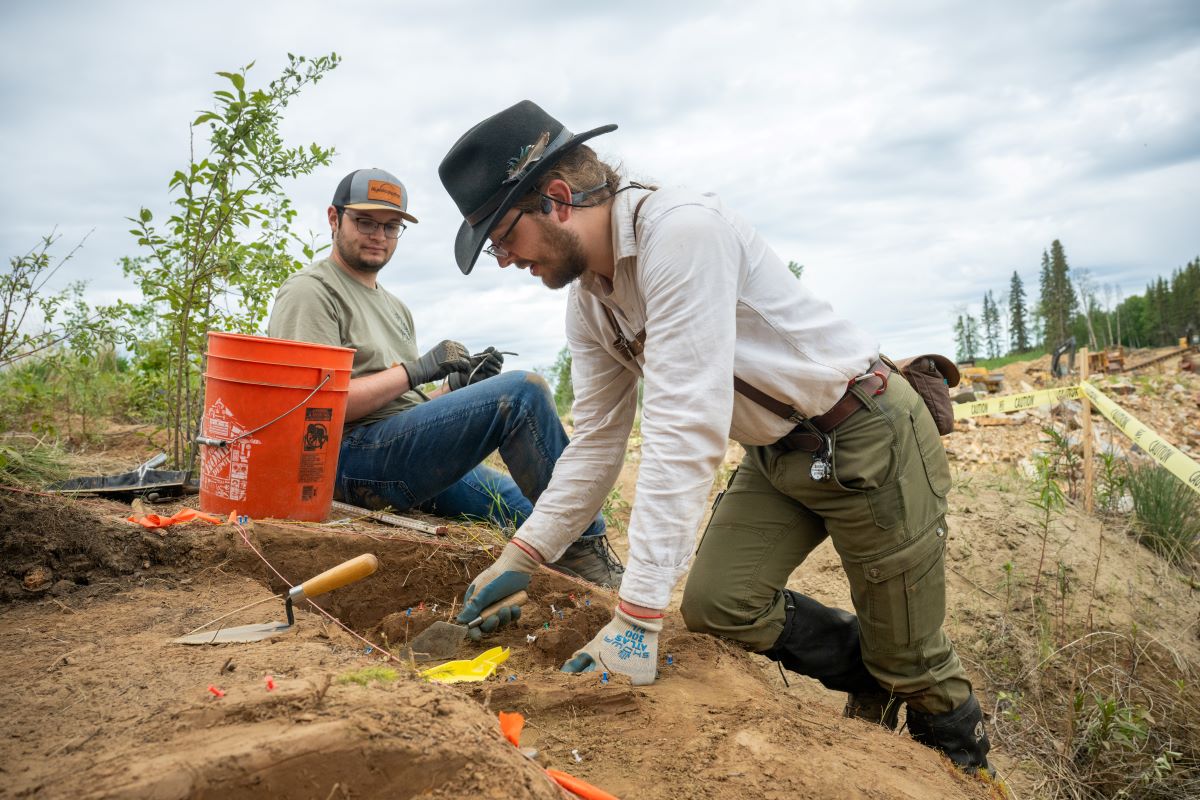
For Mitchell, who grew up in the American Southwest and visited many of the region’s archaeological sites, the discovery of a 12,000-year-old bone was a thrill.
“It felt wonderful. We’d gone through several layers that were relatively culturally sterile, with some bone fragments here and there, but nothing very large,” said Mitchell. “After six or so layers, going over the span of a couple thousand years of stratigraphy, I encountered the bone, and that was a very great surprise.”
Even small bone fragments are important clues
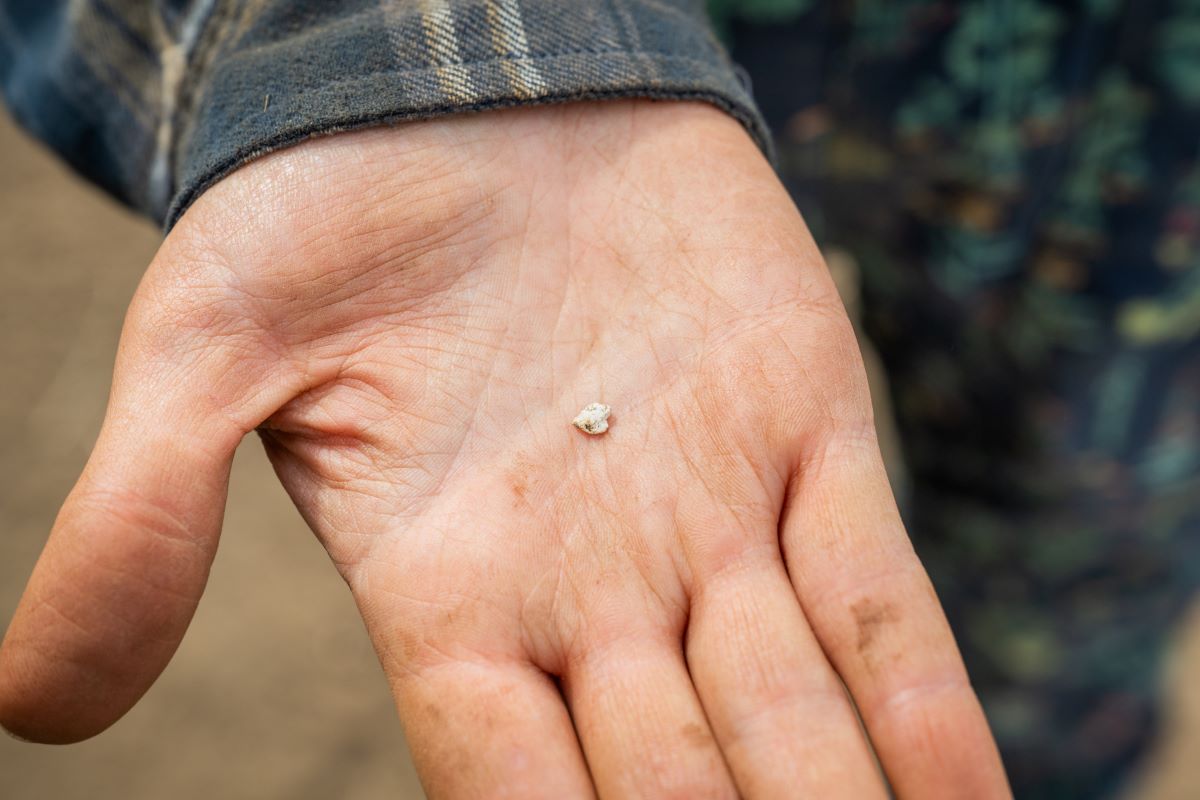
While the ungulate bone was an exciting find, most bone fragments unearthed at the Carpenter Site are too small to identify as coming from any particular species of animal. Students also uncovered calcined bone — remains of bone that has been subjected to high temperatures like those of a hearth — in several areas at the site during the excavation.
Comparing the locations of bone fragments and calcined bone to other features found at the site and the site’s stratigraphy helped the archaeologists to better understand what people on the bluff were doing thousands of years ago.
“Looking at the stratigraphy, it really does help paint a story of what happened in this area even if we were never even remotely near the time of it happening,” said Bradley Loncar, a senior in biological sciences. “You look at the bones, how long they were there, things like that.”
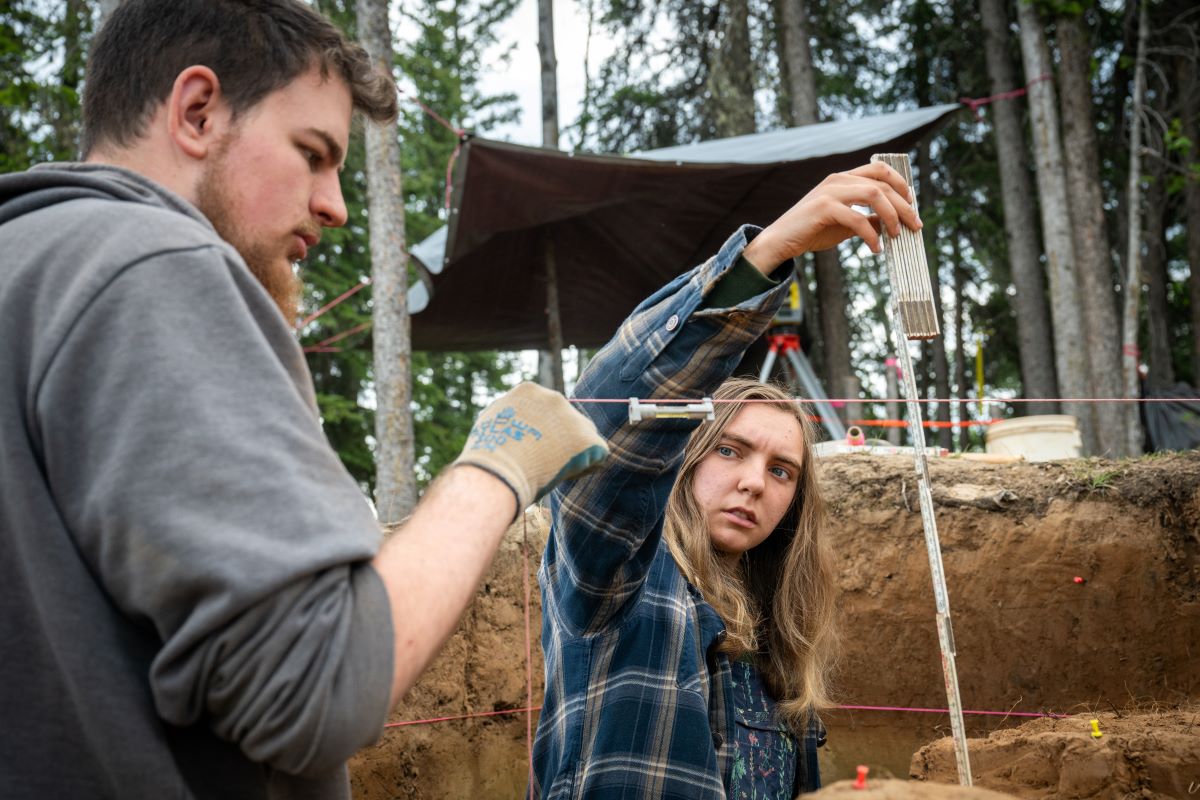
The students documented each artifact they found — even small pieces of calcined bone — and recorded the exact location where the artifact was found. Keeping detailed records of the stratigraphic layers at a site and which artifacts were found in each layer allows archaeologists to compare different sites within a region.
“I’m a very visual person. To study alongside what I’m reading is very beneficial,” said Brooke Hoover, a junior in anthropology. Last year, Hoover had the opportunity to work with Smith at several archaeological sites in the Tanana Valley. “I really learned a lot about Interior Alaska, subsistence living and Ice Age time frame activities, and understood what we were looking at and why it was important.”
This summer, Hoover was able to compare the artifacts and stratigraphy at the Carpenter Site to the sites she had excavated at last year. “A lot of it is familiar colors, familiar layers, familiar story lines or familiar understandings from these other sites that are also in Interior Alaska and applying it to here,” said Hoover. “There’s a lot of questions here, but a lot can be answered.”
A valuable field experience
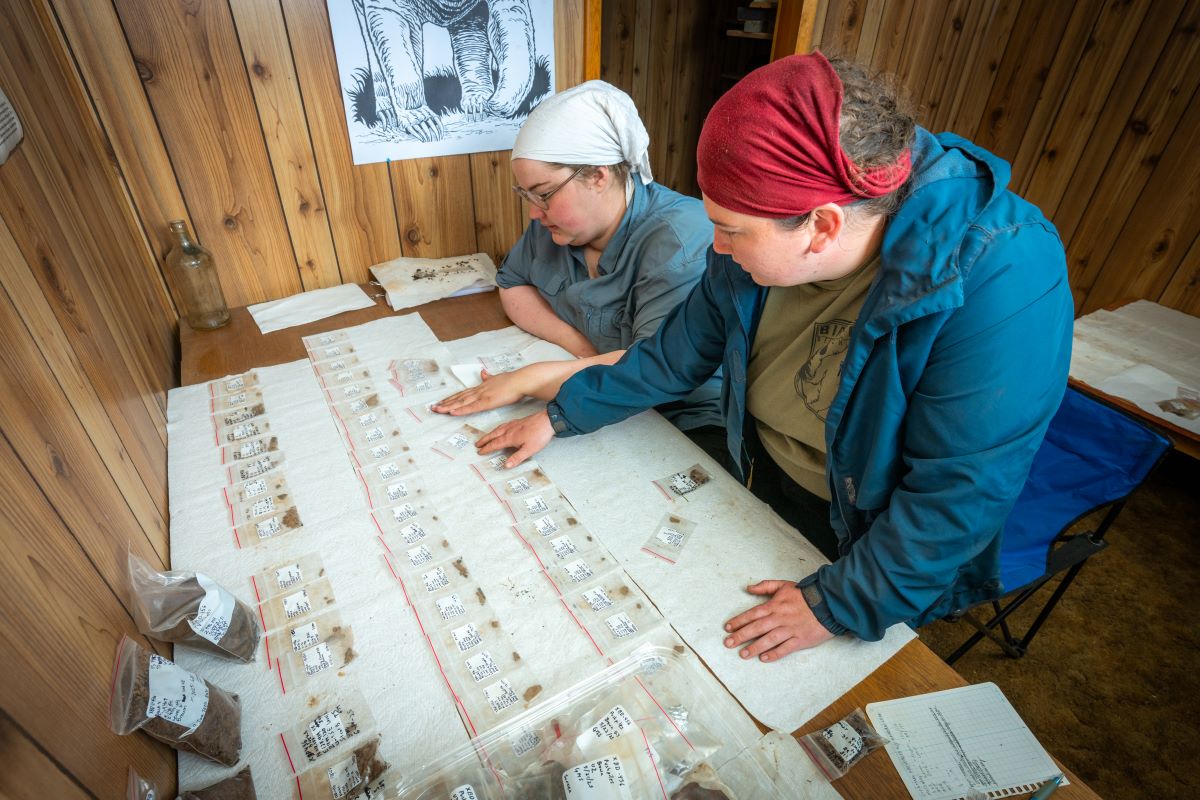
Digging through the entire stratigraphy of the site, from the recent historic layers near the surface to the Ice Age layers just above bedrock, provided the students with a valuable overview of the region’s long cultural and geologic history, as well as the nature of archaeological work in Alaska’s Interior.
“I’ve done a lot of site cataloging, I’ve dug test pits, I’ve used a total station before, but I’ve never done a full-scale excavation before,” said Riordan Page, a junior in anthropology, who worked for three summers as an assistant archaeologist for the Knik Tribe in Palmer before joining the field school at the Carpenter Site. “It’s a subtly longer workday.”
“It’s all a learning experience. Touching everything. Touching the objects really connects me to the people,” said Renee Nalewako, an undergraduate in anthropology and history, while reflecting on the field experience. “I’m probably the first person touching this since the person who dropped it. This object’s been in the ground for hundreds, maybe thousands of years, and I’m touching it. And I’m probably the second or third person to have ever touched this. That’s been a really cool experience for me.”
 "Ice Age cooking? Archaeology at the Carpenter Site" is licensed under a Creative Commons Attribution-NonCommercial 4.0 International License.