


Simulated birth training gives doula trainees real-world practice at UAA
by UAA College of Health |
This summer, UAA's Interprofessional Health Sciences Simulation Center (IHSSC) opened its doors to a different kind of health professional: doulas, a person trained to provide guidance and support to a mother before, during and just after childbirth.
The IHSSC collaborated with the Division of Population Health Sciences (DPHS) and Due North Support Services’ Full Embrace Doula Program to host a full-day simulation training for doula trainees. Designed to mirror the emotional and clinical complexity of a hospital birth, the event marked a significant step forward in maternal health education across Alaska.
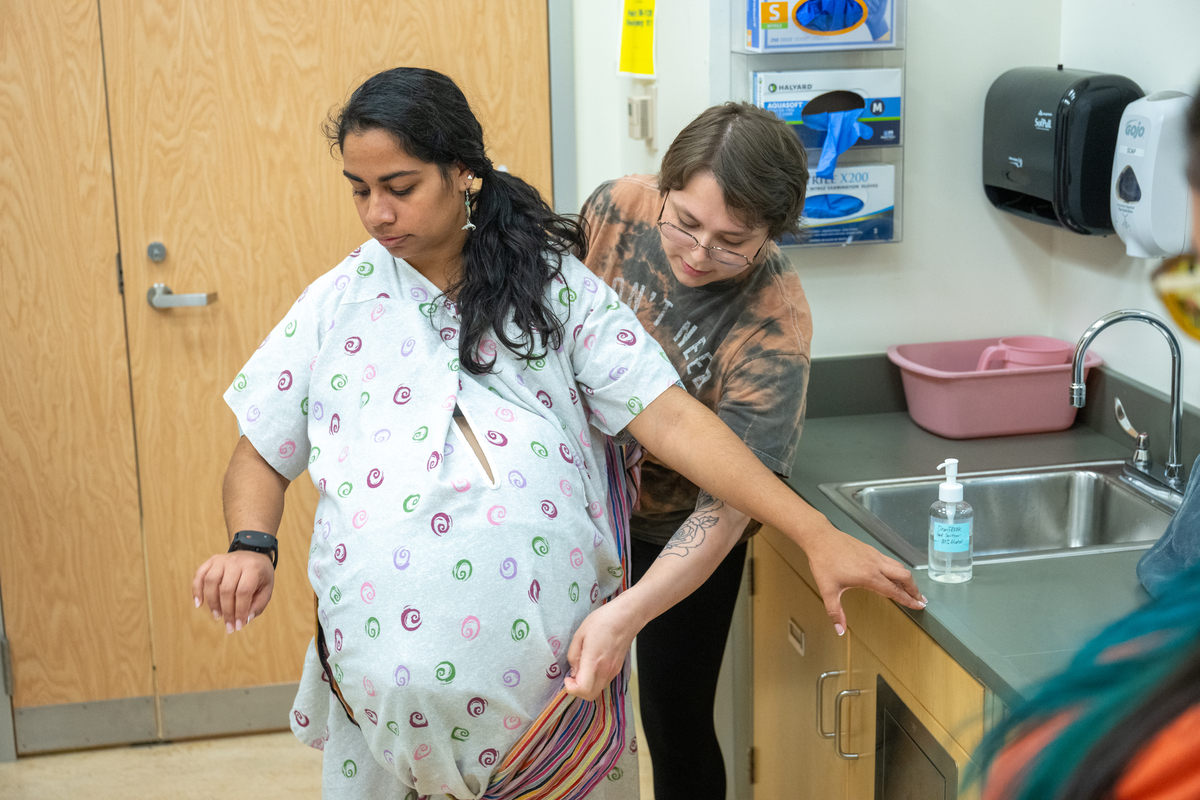
The simulation gave doula trainees an opportunity to support a realistic labor scenario using the AvBirth Simulator — a wearable childbirth simulator that mimics contractions, labor progression and delivery in real time. It was the first time UAA’s simulation center utilized the AvBirth system, integrating it into an immersive hospital-based birth emergency scenario.
“The simulation focused on the kinds of moments that most impact outcomes — when births become complicated, when communication breaks down or when families need someone steady in the room. Doulas are a proven intervention for improving outcomes and reducing maternal mortality, especially among families who face barriers to care,” said Dalecia Young, founder of Full Embrace. “This training gave us the tools to respond to stress, uncertainty and emergencies with calm, skilled support that builds trust and safety.”
Bridging community and clinical care
Assistant Professor Lisa Schwarzburg, DPHS faculty and lead researcher on the project, emphasized the importance of the partnership.
“I was happy to help indirectly through facilitation between the IHSSC and Full Embrace. We instantly established rapport with respect and a sense of camaraderie. It was clear that we were all there for the same end goal of effectively teaching these trainees to do their best to provide this crucial support in what can sometimes end up being a tragic situation.”
UAA’s simulation center typically supports clinical training, but this event highlights the potential to improve public health outcomes. Research shows that trained doulas can reduce rates of cesarean sections, shorten labors and improve overall maternal and infant health, particularly when doulas are trauma-informed and culturally aligned with their clients.
“Alaska is full of people who would make incredible doulas,” said Young. “But we haven’t had the infrastructure to train them at scale. This simulation helped fill that gap.”
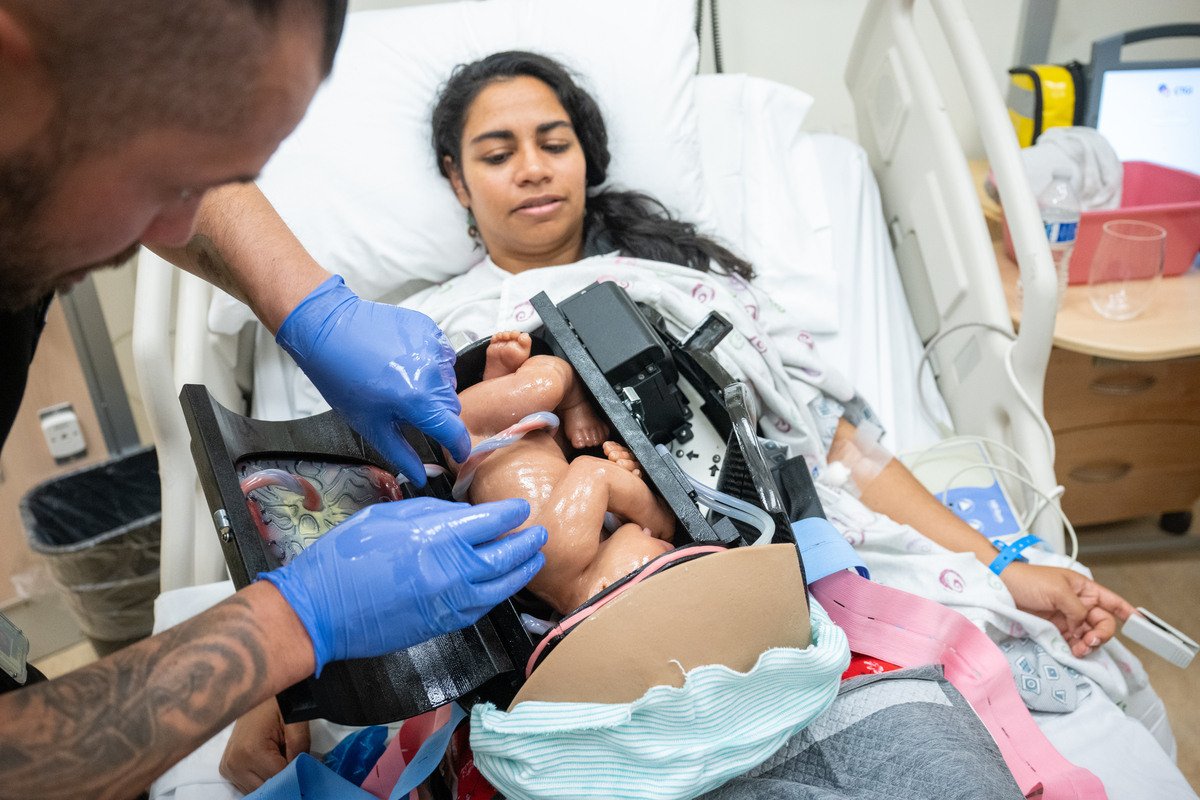
Scenes from COH's first simulated birth training: Student doula Alexanderia Hand helps Bethany Alvarez, portraying the expectant mother; Simulation Specialist Darren Van Deursen preps the device and baby model. (All photos by James Evans / University of Alaska Anchorage)
Technology with impact
The training scenario featured simulated participants portraying a birthing person, their partner, hospital staff and family members. Actors wore the AvBirth system while trainees practiced doula techniques in real-time.
“As someone who has given birth multiple times, I thought the simulator added impressive realism,” said Schwarzburg. “It was bulky, yes, but so is being full-term pregnant. That kind of detail matters when teaching support roles.”
Behind the scenes, the simulation tech team integrated fetal heart monitoring and contraction sensors, troubleshooting challenges to ensure a smooth run. The training also resulted in a video resource that Full Embrace plans to use for supporting doula education in rural Alaska and in Anchorage.
Support from the UA Foundation
The event was made possible in part by funding from a University of Alaska Foundation account, the Excellence in Health Sciences Simulation, which is housed within DPHS. The funding application was submitted by DPHS Assistant Dean Travis Hedwig, who recognized the project’s educational value and broader relevance. With strong support from leadership, the simulation organizers were encouraged to utilize the funds to enhance the scope and quality of the event.
This gift enabled the casting of three trained simulation participants to portray the birthing person, the midwife and a labor-and-delivery health care provider. It also funded essential services such as manikin operation, audiovisual support and elements of the video production process.
Hedwig described the project as a prime example of the “synergistic” activities that bring together university and community-based programs to strengthen Alaska’s health workforce. He emphasized that this type of collaboration demonstrates how university resources can be used effectively to support and grow community partnerships.
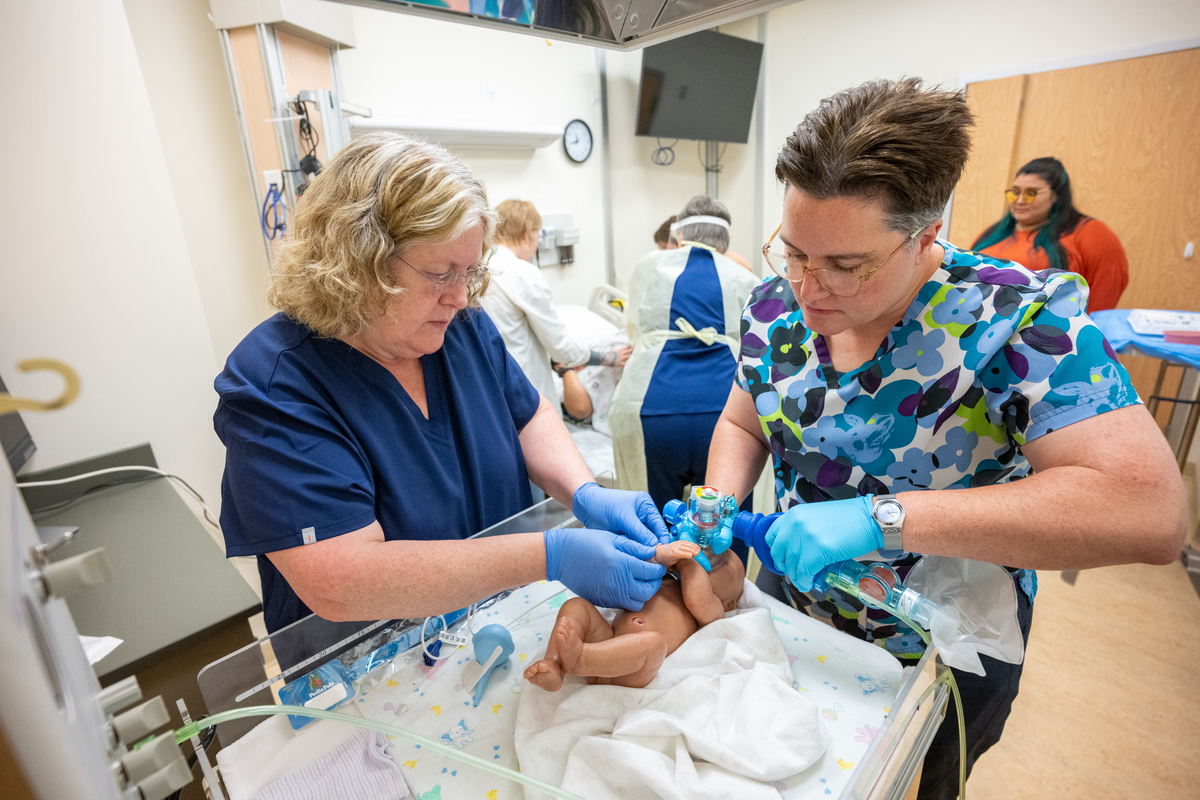
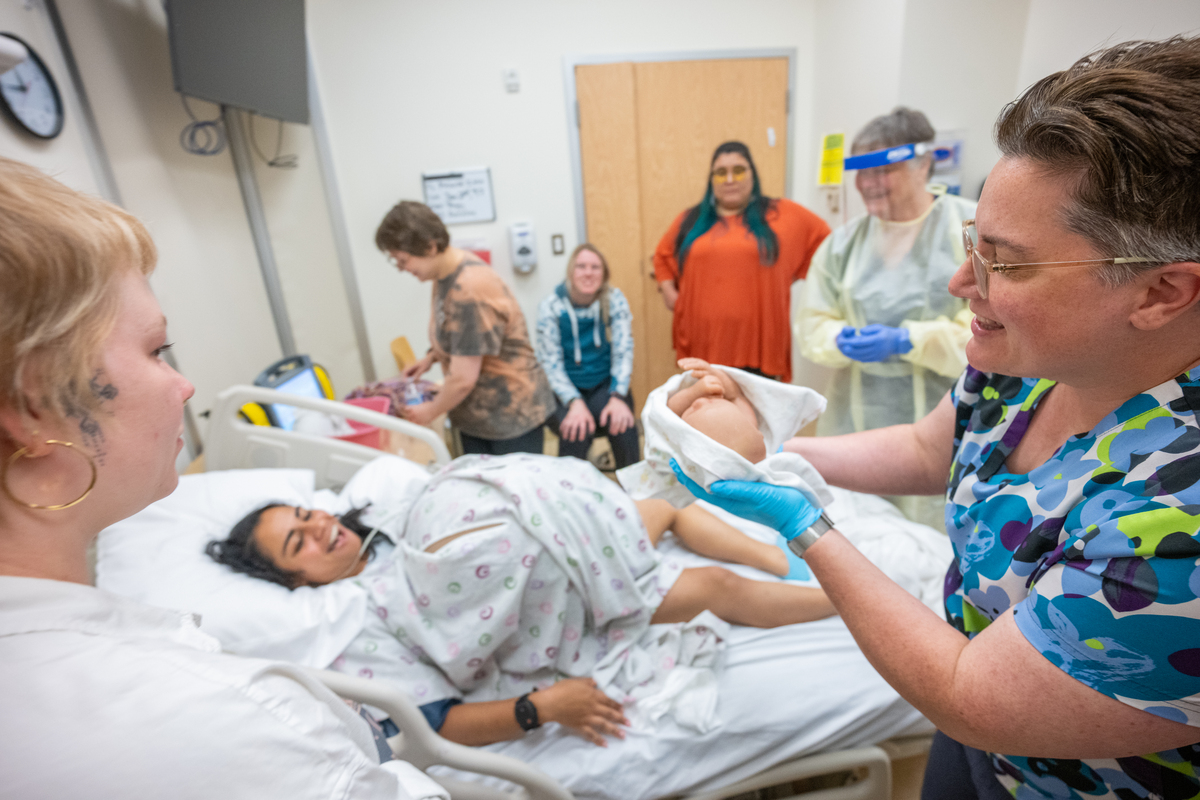
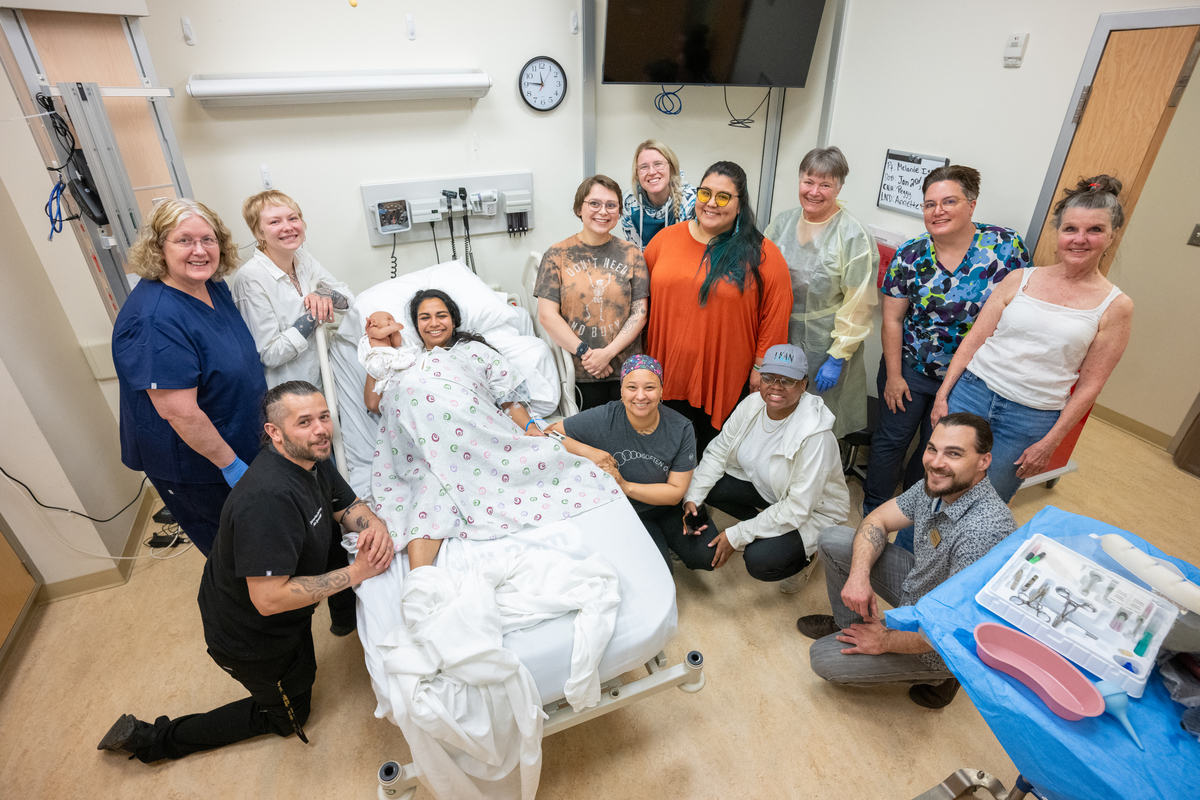
Scenes from COH's first simulated birth training: Simulation Center Director Sara Hannon and nurse role player Annette McNab simulate newborn infant care while student doulas help Bethany Alvarez, portraying the expectant mother; Hannon presents the (simulated) newborn. (All photos by James Evans / University of Alaska Anchorage)
A growing need — and a promising start
With Alaska's growing demand for health care, stakeholders say community-rooted solutions like doula training are more important than ever.
“Doulas don’t just serve families, we strengthen the entire care team,” Young said. “Nurses and midwives told us how grounded they felt with doulas in the room. That’s the kind of systems-level impact we need.”
UAA and Full Embrace plan to continue the partnership, with hopes of expanding simulation access for future cohorts.
“This was more than a successful event — it’s a model,” Schwarzburg said. “A model for how universities and communities can work together to build a healthier, more resilient Alaska.”
 "Simulated birth training gives doula trainees real-world practice at UAA" is licensed under a Creative Commons Attribution-NonCommercial 4.0 International License.