


Environmental science in the field and in the community
by Michelle Saport |
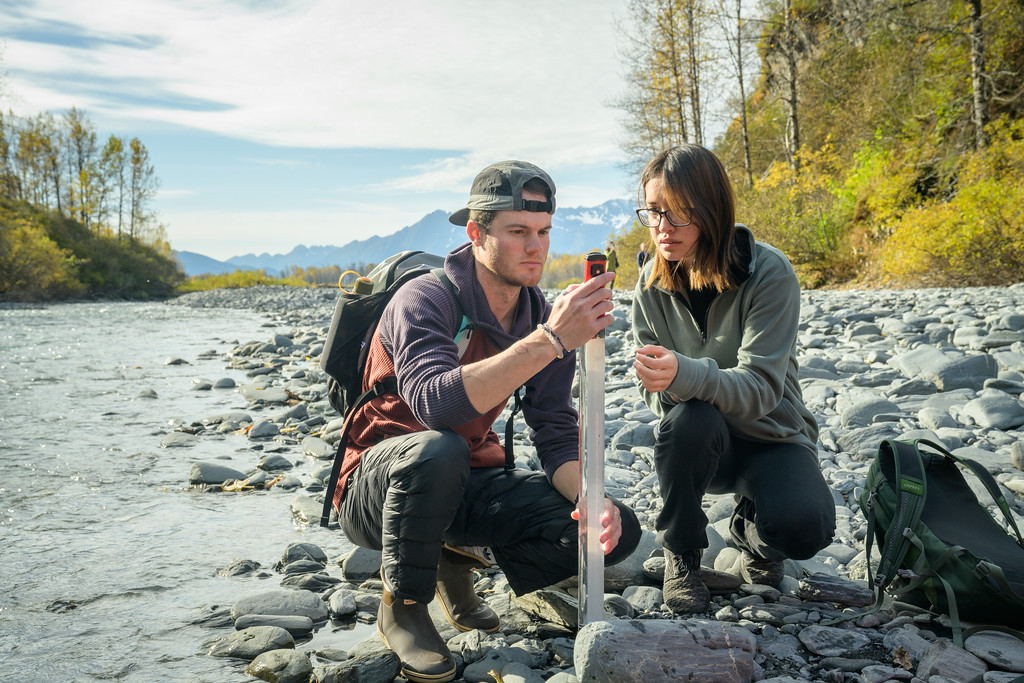
For students in Prince William Sound College's Semester on the Sound program, learning extends beyond the classroom and into the field. From local waters to forests and glaciers, the program leverages Valdez's natural setting to give students an immersive education in environmental sciences with a terrestrial focus in the fall semester and a marine focus in spring.
"It's interesting running a field-based marine program in Alaska in the spring semester, because we do try to be in the field. Especially in the oceanography lab, we're in the field a lot, and sometimes the first step is digging out our field site from snow," said Amanda Glazier, Ph.D., program director and associate professor of biology and environmental science. "But it's not as scary as it might sound. It doesn't get as cold as it might seem. It's just really fun. You're at the harbor in snow, in this beautiful area — it's the best place to do a field course."
Research is an integral part of the curriculum, with projects driven by student and community interests. Glazier earned a Chancellor's Award for Excellence in research and creative activity for her collaborative, field-based approach to teaching.
"The students come up with the questions and they design the projects, and I help guide them," said Glazier. For a good example of the process, consider the Arion subfuscus, an invasive land slug. Three students decided to focus their research on the slug after finding it locally during a class field trip. One student explored the slug's morphology, performing detailed dissections and delving into its ecology. Another student researched the slug's genetics and the third student studied the slug through scientific illustration and learned from Sugpiaq Culture Bearer Diane Selanoff.
Other students have centered their research on subjects as varied as law, environmental DNA, oyster farming, phytoplankton, biofouling, invasive white-tailed deer and geographic information system (GIS) technology.
As a research advisor, Glazier also helps connect students with community partners that could benefit from their projects. For the GIS project, Glazier knew that the student's skills could help organize the data from Alutiiq Pride Marine Institute (APMI)'s Chugach Regional Ocean Monitoring program. "I connected them, and he worked with them to build a GIS map for them using their data. And then once he was done, he handed it off to them, so they own it and everything," said Glazier.
Glazier initially connected with APMI soon after arriving in Valdez to learn more about mariculture and help guide the development of the marine natural resources technician (MNRT) program. The partnership has continued to grow, with APMI hosting students for mariculture internships in the summer and for the program's field week course in the spring — providing students with hands-on training in research techniques and mariculture methods.
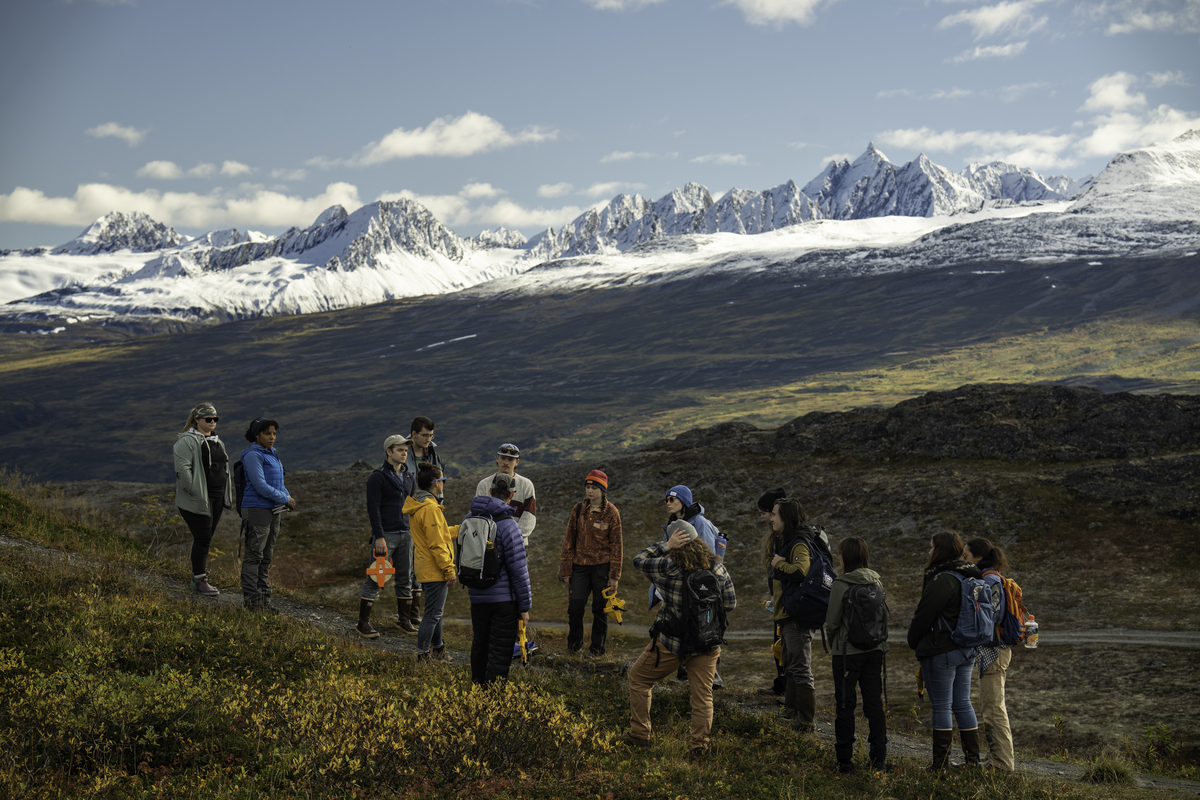
"I wouldn't be able to do a lot of what we do here without support from external people," said Glazier, who serves as the only full-time environmental sciences faculty member at PWSC. Additional partnerships with the Prince William Sound Science Center (PWSSC), Alaska Sea Grant and the Native Village of Eyak (NVE) further benefit both students and the community.
Much like APMI, NVE has played a key role in developing the MNRT program to meet local needs while stressing place-based education and Indigenous-led science. NVE hosted interns for the past three summers, including in partnership with PWSSC this summer. Interns start in Cordova harvesting kelp and then travel to the UAF Matanuska Experiment Farm in Palmer to learn how to incorporate kelp into agriculture.
"I try to go into the partnership doing what will be beneficial to them, because my goal at the college is to get the students experience, and get the students more skills and knowledge," said Glazier. "If NVE or APMI has a project that they want a student to help on, as long as it fits the goals of the funding and everything, then, absolutely, yes, that is something the student can do."
That philosophy is one example of why UAA earned the prestigious Carnegie classification for community engagement earlier this year.
For Glazier, it's an extension of her work to create the best possible experience for students whether they're from Alaska or the Lower 48, small village or big city.
"It's a really small community in itself at PWSC, so there's a lot of support," said Glazier. "It's just a great place to live for a while, take some classes, get some experience and be outside."
 "Environmental science in the field and in the community" is licensed under a Creative Commons Attribution-NonCommercial 4.0 International License.