


Introducing the next generation to philosophy
by Keenan James Britt |
Philosophy is an ancient discipline. For thousands of years, great ideas in philosophy were discussed and passed on to new students to consider and reconsider. But after a few millennia, how do the philosophers of today introduce the new generations into thinking about these age-old questions?
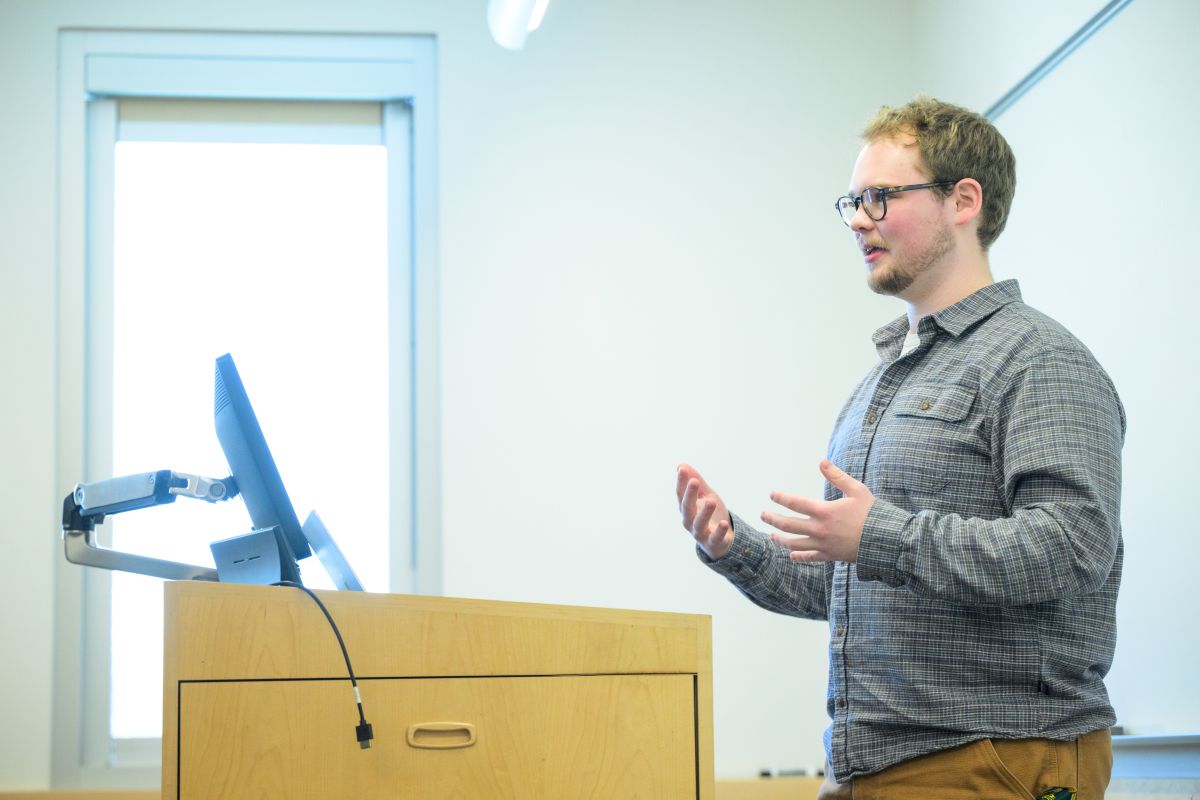
For the last three years Joel Potter, Ph.D., associate professor in UAA’s Department of Philosophy, has taken on the challenge of helping introduce local middle and high school students to some of the field’s biggest questions.
“I was noticing that students were unfamiliar with philosophy until they got to college,” Potter explained. Around the same time, he learned about the Irish Young Philosopher Awards, a national program in Ireland that works to “train up teachers to incorporate philosophy into their curriculum and then recognize the best [student] projects,” said Potter.
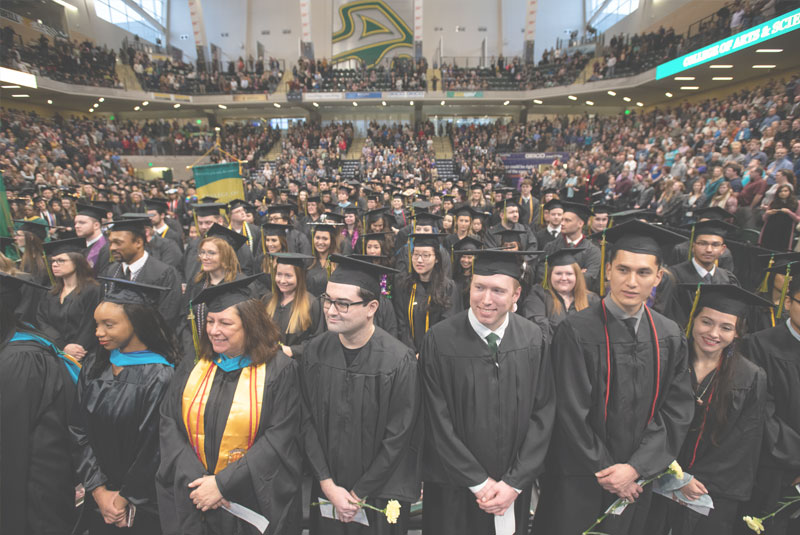
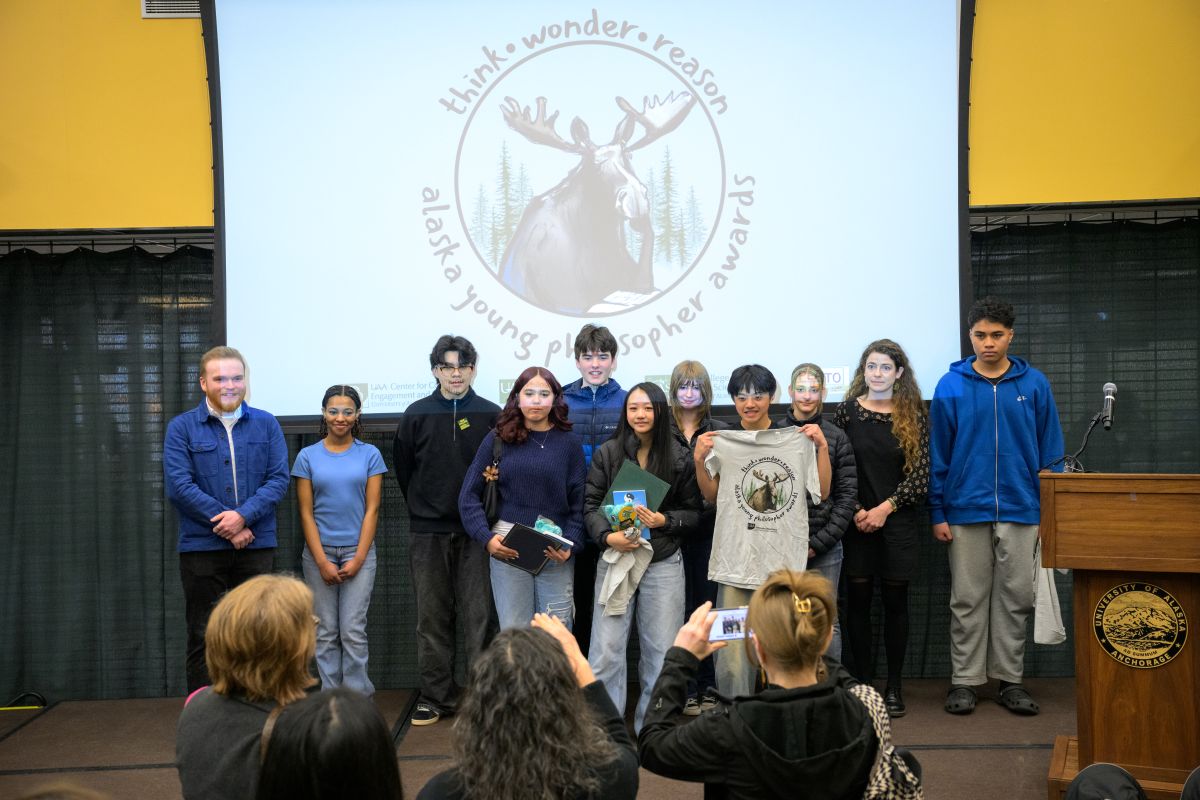
In 2023, Potter reached out to teachers at Romig Middle School and South Anchorage High School in order to develop a program modeled on the Irish Young Philosopher Awards. The collaboration culminated in the first Alaska Young Philosopher Awards (AKYPA) ceremony held at UAA’s Anchorage campus in May 2024.
Each year, the AKYPA program acknowledges exceptional student papers and projects themed around a major idea in philosophy. This year’s program centered around the concept of "the good life," a classic topic in philosophy dating as far back as the ancient Greeks on how to live a fulfilling and meaningful life.
The 2026 awards were held April 24, recognizing 61 top projects.
Incorporating philosophy into the classroom
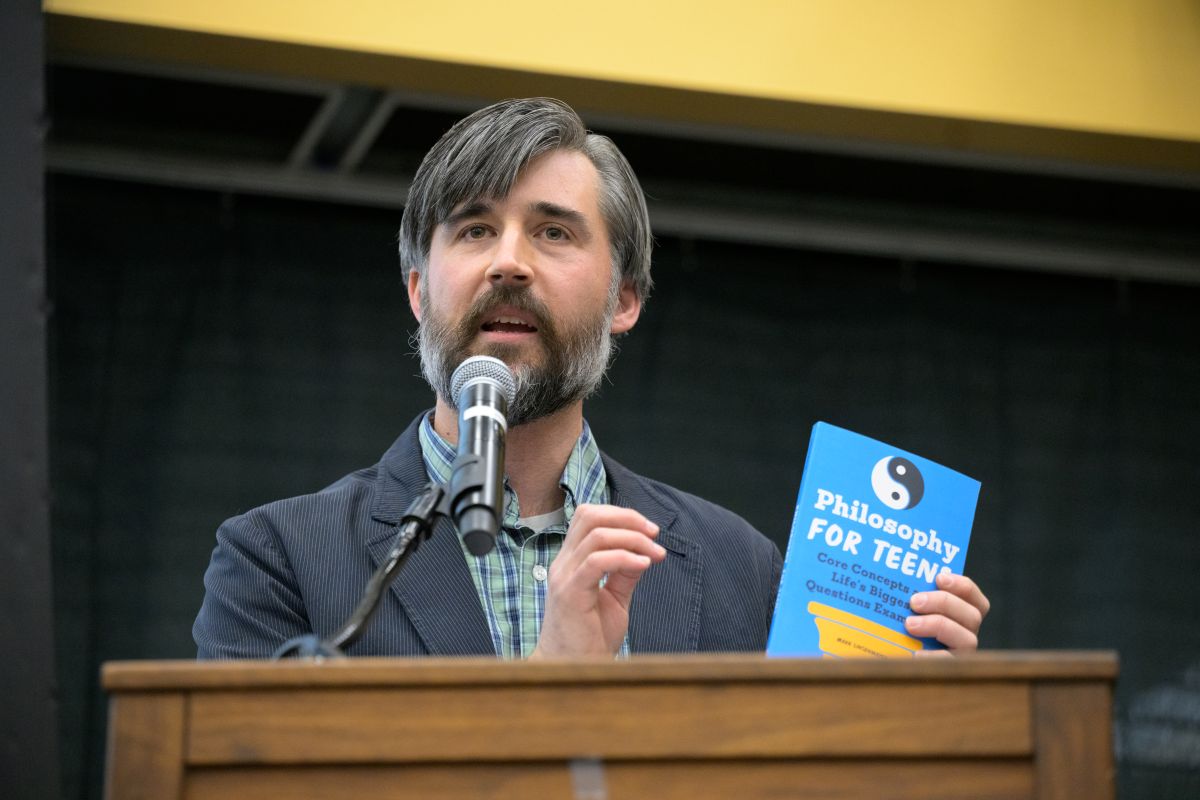
Working with middle and high school teachers to integrate philosophy into existing courses like English or social studies required flexibility and creativity. “Something that I learned in this process is that I have to be super flexible because [teachers] have learning objectives they have to meet, the stuff they have to cover, and so it's important for me to meet them where they're at, and try to help them figure out how philosophy can help them meet the objectives they already have,” said Potter.
English teachers leading modules on utopian and dystopian literature can benefit from incorporating elements of philosophy as “the notions of the good life are embedded in utopian and dystopian stories.” Learning philosophical argumentation can also be helpful to English students learning to compose argumentative essays, as “the basic structure of the [an argumentative essay] fits pretty well with what a philosophy essay looks like,” said Potter.
Philosophy can likewise enhance social studies courses. “At Romig, with the government class, the teacher introduced the students to different theories of justice, and then they engaged with some sort of applied question and related it to Rawls' theory of justice or Locke's notion of property rights, and so on.”
Participating in the AKYPA program offered students the opportunity to develop practical life skills by learning how to develop and present a project for something other than school. Potter believes these are projects that the students “feel proud to share with the public” and that the students are “making a statement for others to engage with.”
Ultimately, seven teachers incorporated philosophy into their classes, reaching over 800 students this year.
Introducing middle and high school students to philosophy can also help prepare students for civic life.
“One of the reasons I picked [the good life] theme is I think that the environment we're in, we all need to learn how to have deep conversations about what matters in life, to think about it for ourselves. But in a pluralistic society, we also need to learn how to reason together about what's important,” said Potter. “Some of the themes that I've picked are guided by that idea, that this is equipping people for good citizenship in a democratic and pluralistic society.”
 "Introducing the next generation to philosophy" is licensed under a Creative Commons Attribution-NonCommercial 4.0 International License.