








A practical guide to assessing children’s mental health
by Keenan James Britt |
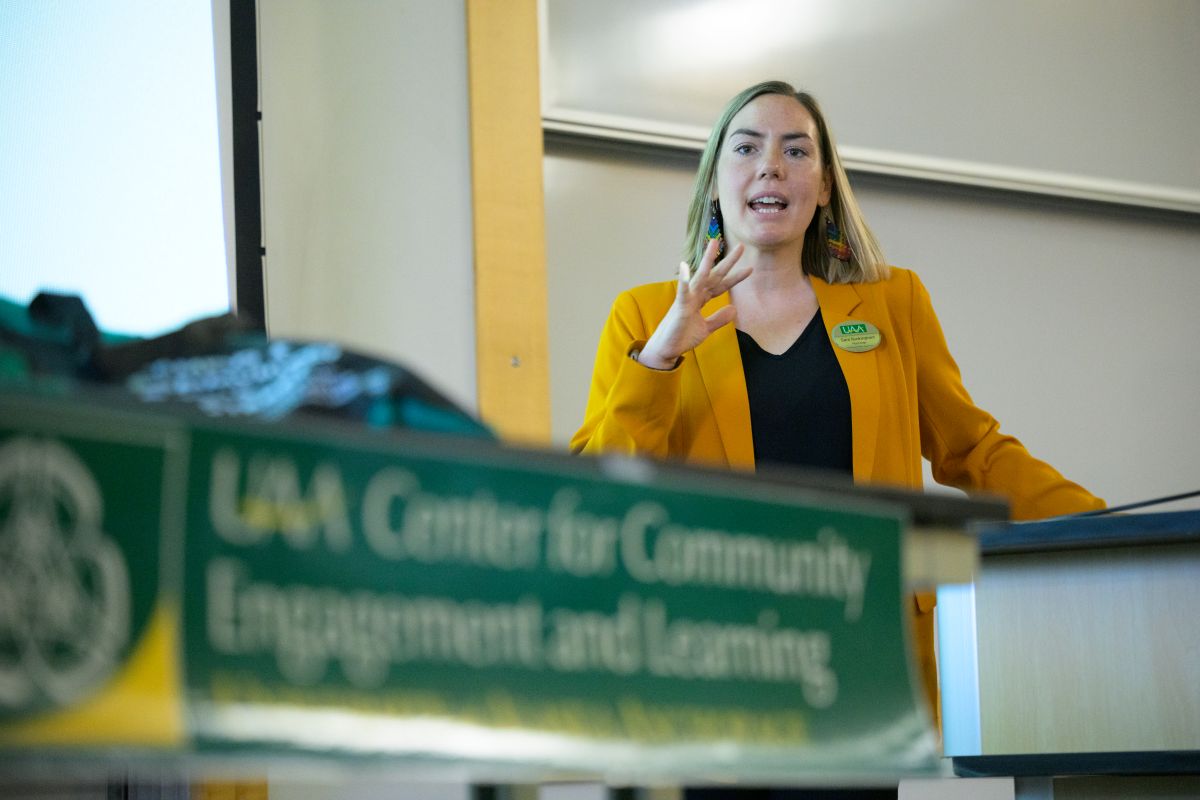
Earlier this year, Sara Buckingham, Ph.D., associate professor of psychology, along with co-author Gerald Oster, Ph.D., published the book Mental Health Assessment with Children and Adolescents: An Integrated, Clinical, Community and Cultural Psychological Framework.
The book received extensive praise within the field, with Debra Kawahara, Ph.D., the 2025 president of the American Psychological Association, stating that the work “redefines psychological assessment.”
The publication comes at a time when many professionals are emphasizing the importance of addressing youth mental health. “You have probably heard everyone from your next-door neighbor to politicians and teachers contend that youth’s mental health is at a crisis point,” the authors wrote. “While this may be, in part, because we are willing to talk about mental health openly in ways we simply did not even just a generation ago, it is also true that we have the highest rates of childhood depression and anxiety on record.”
Despite the growing need for youth mental health services, the authors note that only 4% of psychologists serve children and adolescents and only 10% of affected youth and their families will receive the support they need. Buckingham and Oster intend for their book to help professionals better address these needs.
“The book offers an accessible, comprehensive guide to conducting mental health assessments with youth and families across diverse settings, including schools, clinics, hospitals and legal systems,” said Buckingham. “We wrote the book for graduate students and professionals in psychology, counseling, social work and related fields, with the goal of making complex psychological assessment concepts practical, engaging and actionable.”
Understanding the Three C’s
The authors introduced a framework they call “the Three C’s,” which involves integrating clinical, community and cultural psychology into mental health assessments in order to “foreground culture and context throughout the full assessment process.”
The way people respond to and understand mental illnesses can vary between cultures and communities, making it necessary for professionals within psychology to account for these differences. “What counts as ‘normal’ is not universal,” the authors wrote. “It is shaped by cultural, social and historical forces.” Yet, many clinicians are not trained in understanding these contexts.
“Too often, responding to culture and context is a side note, a footnote, afterthought or something a clinician is expected to learn as they advance in their career rather than integrated into all aspects of mental health assessment from the very beginning,” Buckingham wrote. “For an emotional/behavioral health assessment to be useful and empowering, it needs to be accurate and comprehensive, grounded in the client’s culture, responsible to their circumstances and appropriate for the given context and purpose.”
Understanding the Three C’s isn’t just a hypothetical for clinicians in Alaska, but is essential for serving the 49th state. As the book notes, Anchorage is home to some of the nation’s most diverse communities: “the average elementary school is more than twice as diverse as the average Lower 48 school and over 110 languages are spoken in [the Anchorage School District].”
 "A practical guide to assessing children’s mental health" is licensed under a Creative Commons Attribution-NonCommercial 4.0 International License.
Recommended Stories
 Be a good friend, not a serial killer: UAA WWAMI alumnus donates book proceeds to classmate’s memorial scholarship
A practical guide to assessing children’s mental health
 New OEC in AI and cybersecurity coming to PWSC
 UAA awarded grant to launch Alaska Veterans Memorial Project
 ‘Voting is community care’