





Be a good friend, not a serial killer: UAA WWAMI alumnus donates book proceeds to classmate’s memorial scholarship
by Matt Jardin |
Following in the footsteps of physicians-turned-authors like Sherlock Holmes creator Sir Arthur Conan Doyle and Jurassic Park author Michael Crichton, UAA WWAMI alumnus Philip Araoz, M.D. ’95, is adding novelist to his résumé.
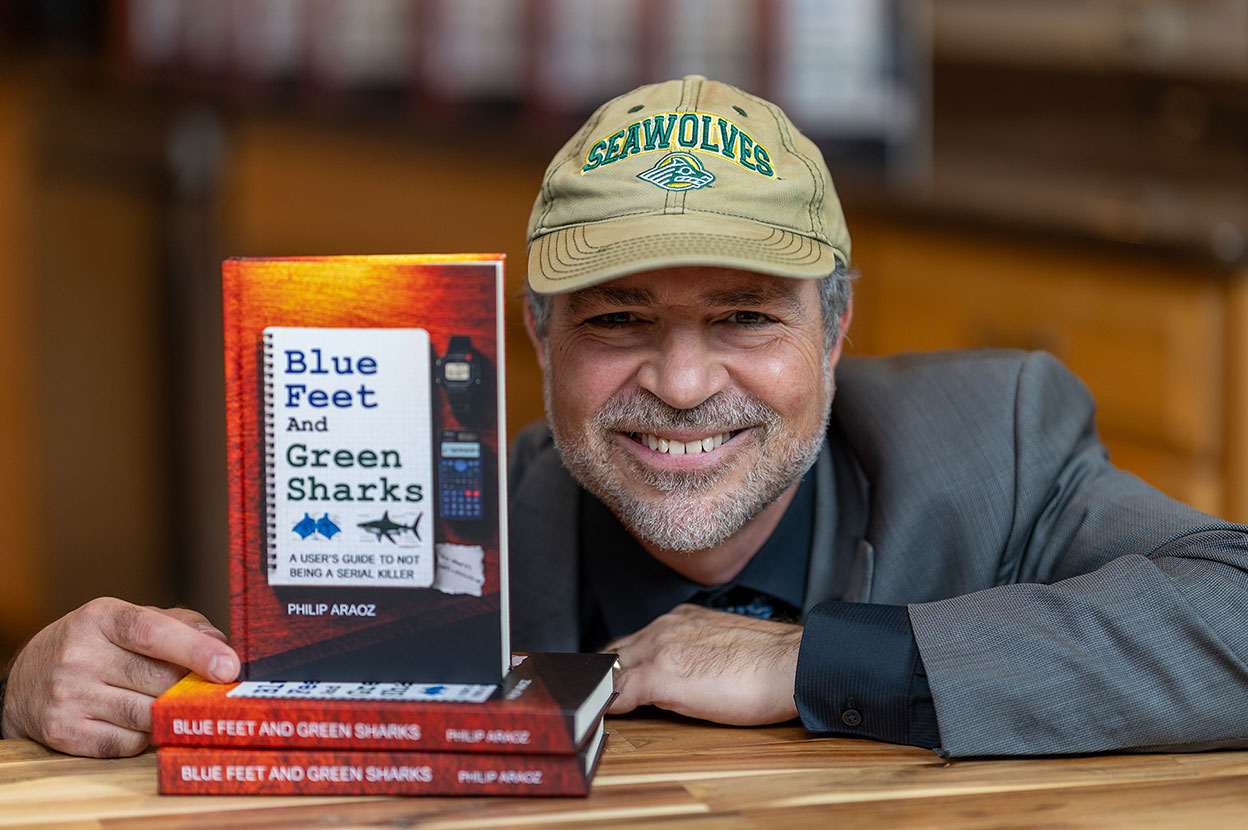
A radiologist specializing in cardiac imaging at the Mayo Clinic, Araoz published his debut novel, Blue Feet and Green Sharks: A User’s Guide to Not Being a Serial Killer, in October 2026. The novel follows a mathematics doctoral student whose analytical approach to life extends beyond school and into his personal relationships. Determined to understand the world through logic and algorithms, the socially isolated protagonist struggles to recognize the value of human connection, even as the people around him offer the support he does not realize he needs.
“[The book] came from me thinking about the way I was in my 20s and how I wish I had just appreciated life and the people around me more at the time the way I do now,” said Araoz.
Though the story is fictional, its inspiration is personal. Araoz drew from his own experiences as a young medical student, particularly his tendency to prioritize academic achievement over personal relationships.
The book also serves another purpose — 100% of its author proceeds will benefit the Sharon Tobias Award, established in memory of Araoz's former WWAMI classmate, Dr. Sharon Tobias, who died in 2021.
“Sharon used to sit in front of me,” said Araoz. “We both liked to draw, so we would compare drawings. She also liked reading romance novels, and she would explain them to me. Then I would try to get her to be interested in football. [The book isn’t] as lighthearted and fun like my time in the WWAMI program was, but that's where it came from, and I wouldn't have started writing it without Sharon.”
While the novel marks Araoz's first published work of fiction, his passion for writing dates back to his childhood. Growing up in a military family, Araoz frequently moved throughout the United States and abroad before arriving in Anchorage at age 12. His father, a physician originally from Colombia who later enlisted with the U.S. military, provided a model for pursuing medicine, although Araoz initially imagined a different career.
After graduating from Soldotna High School and attending Harvard University, Araoz briefly considered becoming a writer, but ultimately pursued medicine, attracted by its structured educational progression and reliable professional opportunities.
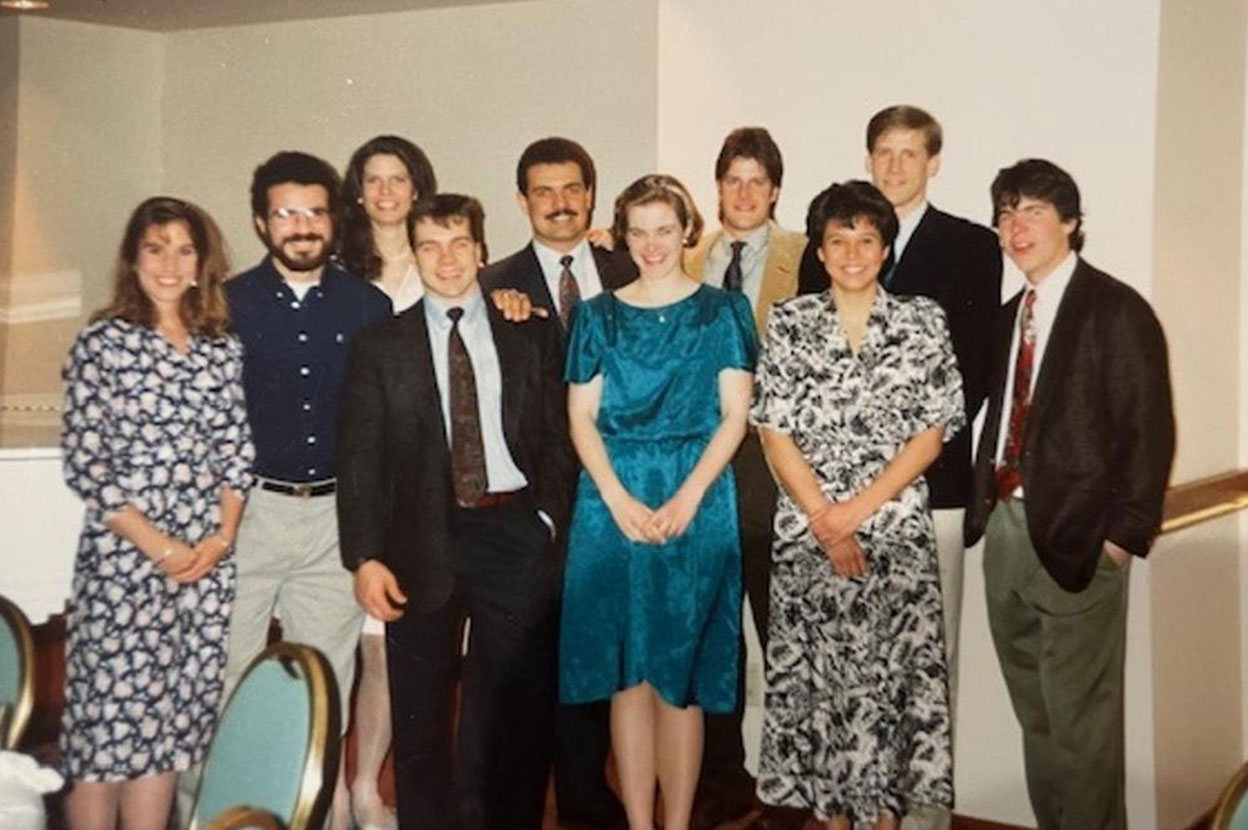
In 1991, Araoz returned to UAA to enter the WWAMI program, a regional medical education partnership between the University of Washington School of Medicine and universities across Washington, Wyoming, Alaska, Montana and Idaho. The program allows students to begin their medical education in their home states while accessing clinical training opportunities throughout their respective regions.
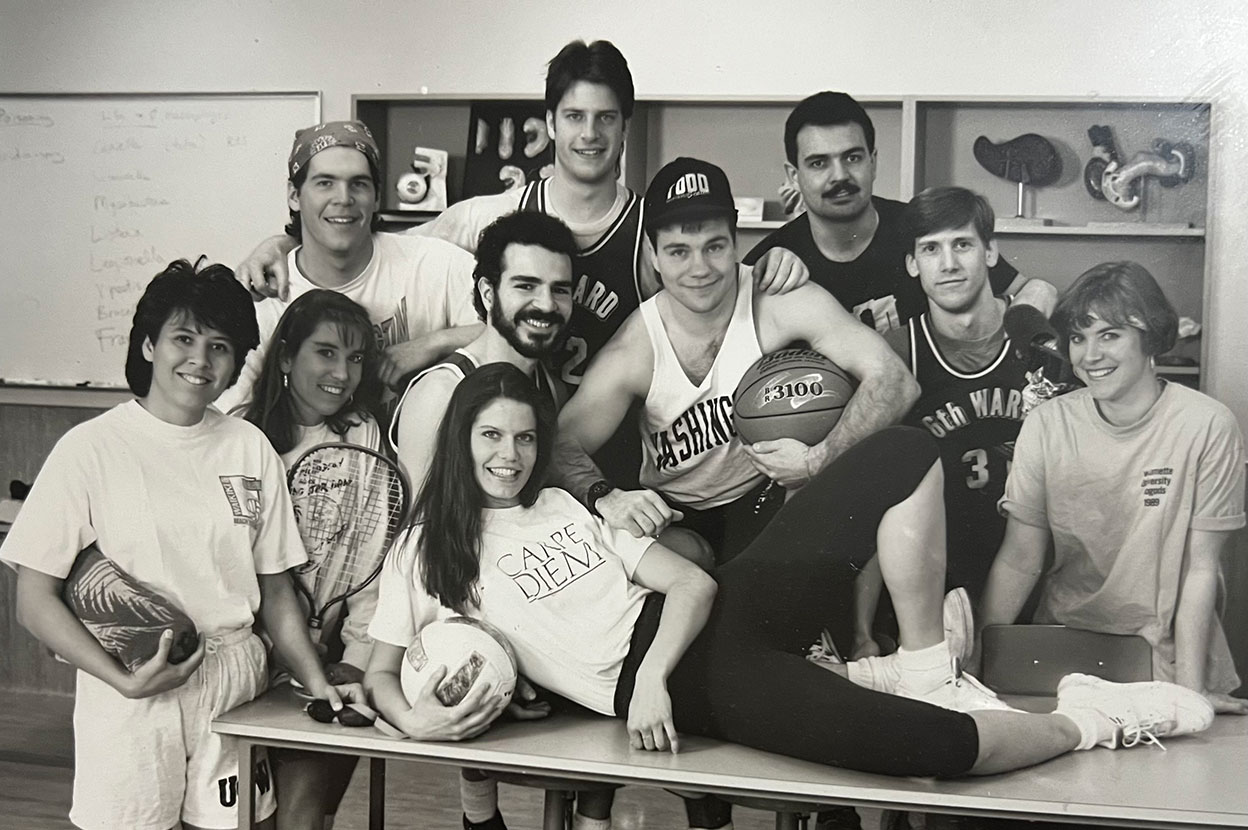
At the time, Alaska's WWAMI cohort consisted of just 10 students who completed their first year of medical school together in Anchorage before continuing their education in Seattle. Compared to current, larger WWAMI cohorts, the small class fostered close relationships, with students sharing notes, studying together and then unwinding afterward.
Araoz credits that collaborative environment, along with instructors such as Bob Fortine and Molly Southworth, with teaching him the importance of compassion and personal connection in medicine. Although he did not fully appreciate those lessons as a student, they would eventually influence his approach to teaching, mentoring and caring for others throughout his career.
“I didn't understand it at the time, but the WWAMI professors did such a good job making us compassionate human beings, which is part of being a good doctor,” said Araoz. “Now I make sure that people don't fall through the cracks. I can't imagine another experience like that, and I was so lucky to have wound up there.”
Following graduation in 1995, Araoz pursued radiology, eventually joining the Mayo Clinic staff in 2002. Alongside his medical research and professional writing, he continued to maintain an interest in fiction, although publishing a novel remained an unrealized ambition for decades.
That changed in 2025, when preparations for his medical school's 30-year class reunion reconnected Araoz with former classmates. During those conversations, he learned of Tobias' passing and efforts to establish a lasting scholarship in her memory.
The news prompted Araoz to revisit his experiences in medical school, beginning with humorous recollections of his time in Anchorage and expanding into more introspective stories about his years in Seattle. What started as 11 pages of personal memories gradually evolved into the fictional narrative that became Blue Feet and Green Sharks.
For Araoz, donating the book's author proceeds to the Sharon Tobias Award was an easy decision, as his renewed connection with his WWAMI cohort and memories of Tobias, whose personality and compassion left a lasting impression, had directly inspired the story.
Beyond supporting future students, Araoz also hopes the novel encourages readers to reconsider how they approach their relationships and ambitions. Reflecting on his younger self, he recognizes that his determination to succeed sometimes prevented him from appreciating the people and experiences surrounding him.
“What I want people to get out of the book is the importance of being vulnerable, and to appreciate the people you have around you,” said Araoz. “Enjoy all that stuff while you have it, because you never really realize how good those times were until much later.”
 "Be a good friend, not a serial killer: UAA WWAMI alumnus donates book proceeds to
classmate’s memorial scholarship" is licensed under a Creative Commons Attribution-NonCommercial 4.0 International License.
Recommended Stories
Be a good friend, not a serial killer: UAA WWAMI alumnus donates book proceeds to classmate’s memorial scholarship
 A practical guide to assessing children’s mental health
 New OEC in AI and cybersecurity coming to PWSC
 UAA awarded grant to launch Alaska Veterans Memorial Project
 ‘Voting is community care’