





Rethinking Aging: COH faculty offer new insights on mental health, culture, and community
by Alison Miller |
Aging may be universal, but it rarely looks the same for two people.
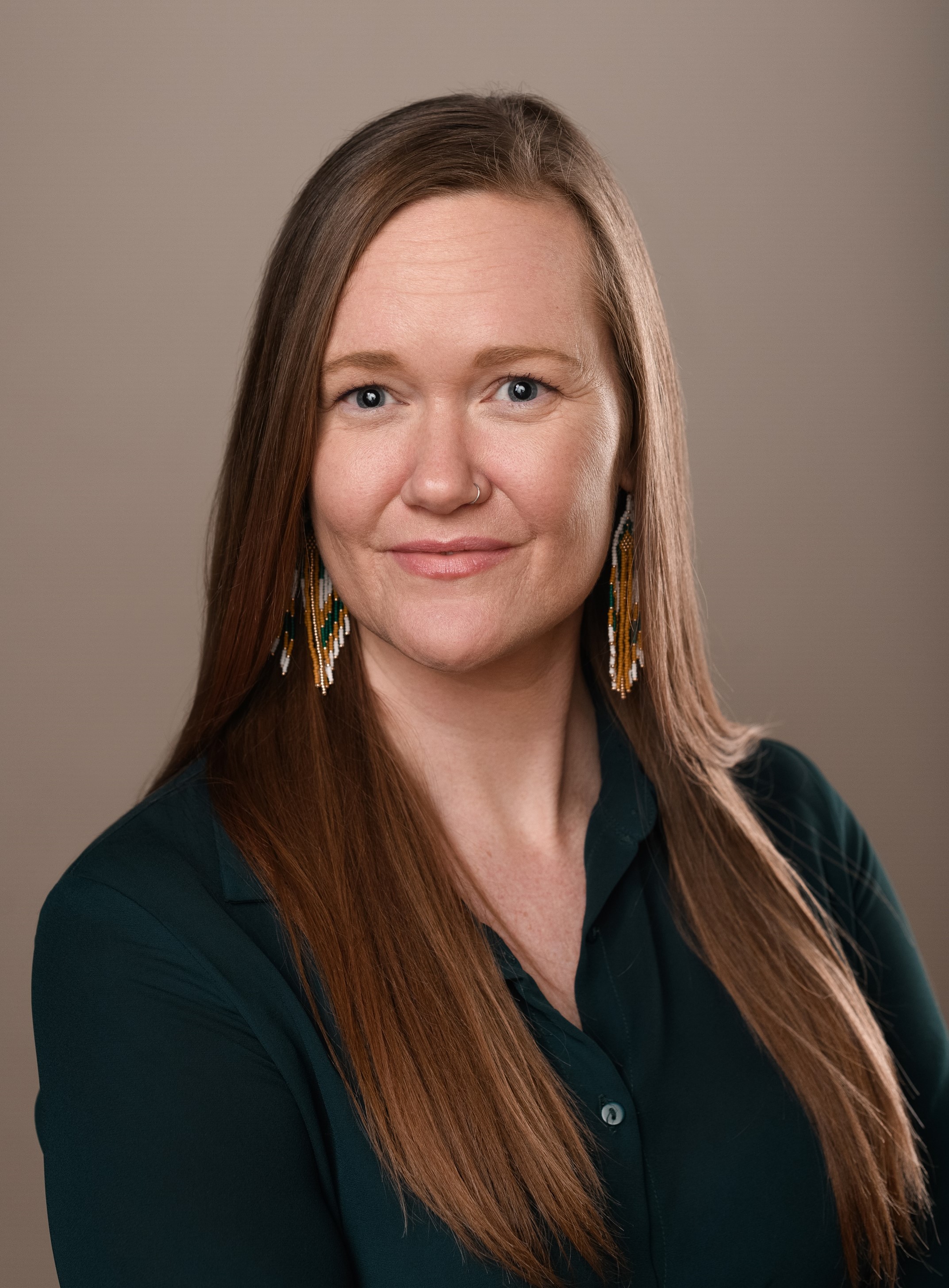
That’s the epiphany that then-doctorate student Dr. Britteny Howell had while she was working toward her PhD in anthropology at the University of Kentucky. It struck her as odd that, as a field, anthropology had yet to delve into the experience of aging itself.
“Older adults are often central to anthropological research as key informants or cultural knowledge-bearers, but they are typically selected and interrogated for what they know and can explain about culture rather than for insight into their own lived experiences of the process of growing older,” said Dr. Howell, who is now a Division of Population Health Sciences Associate Professor with the UAA College of Health. “That gap felt like an important opportunity within my field.”
As a student, Dr. Howell was fascinated by the fact that people can have radically different experiences of aging, from their physical health to their social roles and attitudes. Some of those differences can be attributed to variations in culture and location, but so much of it depends on the individual. When she started her academic career, Dr. Howell made the decision to dedicate her research to the study of aging, including how the experience of aging is related to mental health, social context, culture, personal factors, and the environment.
Rethinking mental health among older adults
The question of how to understand and improve the experience of aging has huge implications for millions of people around the country – and the world. “We are living through a historic demographic transformation as populations age worldwide,” said Dr. Howell. According to the US Census Bureau, in the last century, the population of adults in the United States aged 65 and over grew nearly five times faster than the total population. As the Baby Boomer generation continues to age, experts predict that the proportion of older individuals will continue to grow.
Dr. Howell is acutely aware of (and excited about) the potential real-world applications of her work. “The scale and speed of this change create both urgent challenges and meaningful opportunities for research, policy, and practice,” said Dr. Howell. “I wanted to be part of the work of understanding these shifts and helping develop thoughtful future healthcare workers.”
Recently, two new publications by Dr. Howell and her team have shed more light on the complex relationship between aging and mental health, and how that relationship is shaped by factors like social context, culture, activities, beliefs, environment, and more.
Functional fitness and mental health for older women
Exercise can be a powerful factor in promoting healthy aging and allowing seniors to maintain mobility and independence. Regular exercise can reduce the risk of chronic disease and falls, promote mental health, and even serve as a protective factor against cognitive diseases like Alzheimer’s and dementia. What’s less clear, however, is whether some types of exercise may be more effective than others.
Dr. Howell and her co-authors chose to look closely at functional fitness – a category of exercise that mimics everyday movements like lifting, balancing, and standing up from chairs – by conducting a thorough review of previous research findings on the topic. Functional fitness exercise programs have grown in popularity in recent years, thanks in part to the influence of programs like CrossFit and F45 Training. In particular, they wanted to know if functional fitness programs had a positive impact on the mental health of older women, a group that has been historically underrepresented in this body of research and who tend to experience disproportionately higher rates of anxiety, depression, and social isolation than their male counterparts.
Their review – which incorporated research from around the world – found that functional fitness programs are frequently associated with improved mental health, social functioning, and quality of life. Their findings also highlight the role of social, group-based exercise contexts as a potential mechanism for mental health benefits, while also identifying persistent limitations in how sex/gender, health status, and community-dwelling populations are represented in the literature. Their study, “A systematic review of mental health benefits of functional fitness exercise interventions in older women,” was published in January 2026.
Dr. Howell hopes that demonstrating the value of functional fitness programs will be useful in shaping the exercise-related resources that are offered to seniors at places like gyms and community centers. “This does not just mean offering Silver Sneakers and chair yoga classes,” Dr. Howell said. “I hope this study helps practitioners, community organizations, healthcare providers, and program planners think more critically about tailoring programs and viewing moderate-to-vigorous physical activity not just as a way to get physically healthy, but as a meaningful pathway to mental well-being for older adults.”
But beyond that, she wants to shift the way older women think about exercise. While conducting the review, Dr. Howell said she was surprised by how little research there was in the United States on moderate-to-vigorous exercise among older women. She suspects that this is due to underlying cultural assumptions about what type of activities women enjoy, or what they are perceived to be capable of. These assumptions might show up as the idea that older women might not be strong enough to engage in activities like CrossFit, or that they might prefer something more gentle and low-impact, like yoga. She hopes that her research serves to push back against some of those beliefs. “This work shows that older women can do hard things; they can benefit and may even enjoy it,” she said. “On a daily level, I hope this work helps older women feel empowered to claim space in strength-based or higher-intensity programs, rather than internalizing messages that they should only engage in gentle or passive forms of activity.”
The impact of cultural continuity on mental health for Indigenous older adults
The experience of aging is highly variable and subjective for everyone. But for some marginalized populations – for example, Native Americans and Alaska Natives – historical trauma and discrimination can introduce additional layers of complexity. These groups also tend to be underrepresented in many research contexts. What’s more, when research is conducted, it tends to focus more on the challenges and barriers these populations face (a “what’s wrong?” approach) as opposed to recognizing their unique strengths and assets (“what’s working?”).
To better understand mental health among Elders in these populations, Dr. Howell and her colleagues analyzed existing survey data from Alaska Natives, Native Americans, and Native Hawaiians to gauge the importance of factors like family connection, social engagement, and participation in traditional cultural practices. They found that Elders from these groups who participated in traditional cultural practices and social activities with family and community members had better mental health outcomes, likely due to the social support that these practices and activities provide. As such, cultural connection and strong engagement with community and family can be seen as protective factors that may help support well-being and positive aging experiences. Conversely, the research team found that other factors, such as physical limitations that interfered with activities of daily living and caregiving responsibilities, were associated with poorer mental health outcomes.
Their resulting publication, “Risk and protective factors for mental health among Indigenous older adults in the United States,” supports a holistic perspective on aging that doesn’t just focus on the presence or lack of disease or physical impairment, but also incorporates less tangible factors like lived experience, identity, culture, and community. “Our hope for this work is that it shifts the narrative from one focused solely on trauma and disparities to one that also recognizes resilience, cultural continuity, and social engagement as powerful protective forces,” said Dr. Howell. “In a non-academic context, we hope community leaders, service providers, and family members recognize how critical cultural participation and social connection are for mental health in later life.”
On a broader level, her work also adds to a growing body of literature that shows that cultural continuity and connection are vital aspects of overall health for Indigenous people of all ages – and in doing so, strengthens the case for more resources and support to sustain cultural practices. “We also hope policymakers understand that supporting Elders is not only about medical services, but about funding programs that sustain cultural practices, family caregiving supports, and opportunities for meaningful engagement.”
Translating research into action
Even as she celebrates the release of these two publications, Dr. Howell is already looking ahead to several upcoming projects, several of which build on her recent work. Currently, she’s collaborating with other members of UAA’s Healthy Aging Research Laboratory to examine how beliefs around aging, self-efficacy, and intervention programs influence health behaviors and factors like physical activity, diet, functional fitness, and nutritional status among older adults in Alaska. In another partnership, she and her research colleagues are also preparing a paper on chronic disease prevalence and risk factors among American Indian and Alaska Native Elders using the same dataset that informed their work on cultural continuity as a protective factor.
Dr. Howell is also looking forward to broadening her research to include environmental and contextual dimensions of aging. Another collaborative project she’s working on involves a systematic review of sleep and circadian patterns among older adults in the Circumpolar North, which examines how geography, light exposure, and environmental conditions shape both physical and mental health in later life.
A major throughline in all of Dr. Howell’s work is her dedication to community-based research with real-world applications. But figuring out how to bridge academia and the world of public health practice can be challenging, to say the least. Translating research findings into effective programs or educational initiatives to help older adults requires careful relationship-building with community partners and a willingness to navigate complex institutional infrastructure and uncertain funding landscapes. Over the last eight years, Dr. Howell has learned a lot about how to do just that and is currently compiling eight years’ worth of work into a resource that she hopes will help the next generation of researchers in her field.
How to learn more
March is National Careers in Aging Month! If you are interested in learning more about careers in aging, consider UAA’s new Occupational Endorsement Certificate in Gerontology. This OEC is ideal for those interested in contributing to Alaska’s senior care workforce across nonprofit, tribal, and public sectors. It also introduces students to pathways in gerontology research. Courses in the certificate may be applied as elective credits toward the Bachelor of Science in Health Sciences or other approved programs, so you may be able to earn it along the way to your major. For more information, please contact Dr. Howell at bmhowell2@alaska.edu.