




Student Spotlight: Ashley Ihde - from health sciences to public health practice in Alaska
by Eduardo Piqueiras |
At a Ripple Effects Mapping session with public health partners from across Alaska, Ashley Ihde helped facilitate a conversation about data, programs, and prevention efforts happening across the state. The session was part of her work with The Alliance’s Data and Learning Workgroup through UAA’s Center for Alcohol and Addiction Studies (CAAS). Instead of another survey, members talked through what was happening in their communities while local artist Ptery Lieght translated the conversation into a graphic map of connections across the work.
For Ashley, now a UAA Master of Public Health student, the experience made public
health collaboration tangible. She completed a Bachelor of Science in Health Sciences
at UAA in 2023 and continued into graduate study, where CAAS gave her an opportunity
to move from learning about public health to participating in it alongside people
working in substance misuse prevention, recovery, and wellness across Alaska.
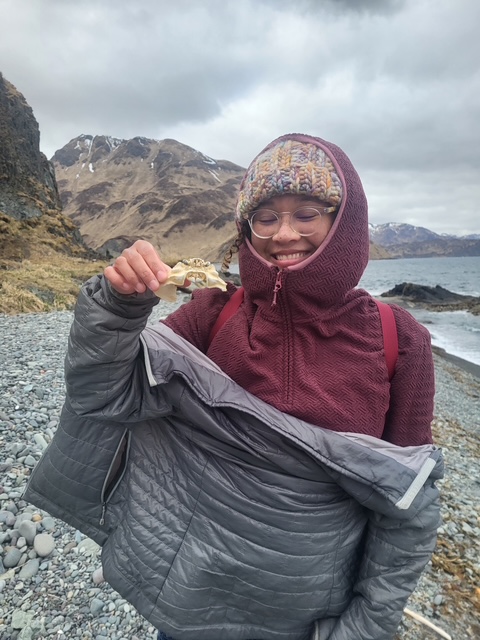
Name: Ashley Ihde
Program: Master of Public Health
Educational background: Bachelor of Science in Health Sciences, UAA, 2023
Expected graduation: 2027
Hometown: Anchorage, Alaska
Current community: Eagle River, Alaska
You completed your BSHS at UAA before continuing into the MPH program. What made graduate school feel like the right next step?
During my last year in the undergraduate program, the core ethical principles and the 10 Essential Public Health Services really resonated with me. As I reflected on my undergraduate experience, I realized there was still so much I wanted to learn and explore within the field of public health.
Dr. Travis Hedwig was my undergraduate advisor and encouraged me to think about graduate school, and UAA’s MPH program felt like a natural next step for me.
When the opportunity to work on this project came up, Dr. Hedwig invited me to become involved. I’m thankful I was able to participate and be part of such a great team within The Alliance.
What did your role with The Alliance involve, and what did you find most meaningful about working with partners from across the state?
Throughout the project, I assisted Dr. Hedwig with facilitating The Alliance’s Data and Learning Workgroup meetings. My responsibilities included helping develop meeting agendas, taking notes, and helping plan and facilitate a Ripple Effects Mapping session with Alliance members from across the state.
One of the most rewarding parts of the experience was having the opportunity to meet the diverse group of workgroup members and listen to their insights: what was working for their community, what wasn’t working, and what they were experiencing in their work. I especially appreciated being part of a group where everyone’s input was valued.
The Ripple Effects Mapping session was one of the highlights of your experience. What made that session stand out?
The Ripple Effects Mapping session was definitely one of the highlights from my time on this project. The session created an opportunity for Alliance members to have a broader conversation about the data, programs, and prevention efforts happening throughout Alaska.
I loved that it was an interactive way to complete an updated data scan without inundating members with surveys. People could talk with one another about what was happening in their communities and hear about the work happening elsewhere in the state.
We also got an amazing graphic map, created by local artist Ptery Lieght, from everything
mentioned during the session. Being able to see it all together helped show the impact
and connections of the current prevention and data work happening across Alaska.
How has this experience influenced the way you think about collaboration, community engagement, and public health practice in Alaska?
This experience has strengthened my appreciation for UAA’s emphasis on connecting students with local organizations and providing opportunities to apply what we learn outside of the classroom. I am a visual and hands-on learner, so participating in a project like this helps bring public health theories, frameworks, and concepts to life for me.
It also showed me how important collaboration is, especially in a place like Alaska, where communities can be separated by geographic distances and have very different needs and resources.
What stands out most to me was being in the company of so many on-the-ground leaders working in substance misuse prevention and recovery throughout Alaska. It was inspiring to connect with and learn from people who share a passion for this work but approach it from different perspectives.
Alliance members represented different communities, organizations, and approaches to prevention, recovery, and wellness. Hearing about the creative ways organizations are responding to the unique needs of their communities helped broaden my understanding of what prevention can look like, especially in the context of Alaska’s diverse communities.
Working with The Alliance gave me the opportunity to see how bringing people together can create space for sharing knowledge, resources, experiences, and ideas that can strengthen public health efforts across the state.
As you look toward completing your MPH, where do you hope public health takes you next, and what will you carry forward from this experience?
After completing my MPH, I hope to continue working in Alaska, particularly in either housing or environmental health.
One thing this experience has definitely solidified for me is how much I value working collaboratively and learning from people who bring different experiences and perspectives to the table. I will definitely be joining a coalition for whatever area of public health I end up involved with in my future career!