





Due to ongoing unsafe road conditions in Anchorage and the surrounding areas, the Anchorage campus will be closed today, Friday, Nov. 20, 2026.
Briggs Lab awarded $6M NSF grant for biomining, AI project
by Keenan James Britt |
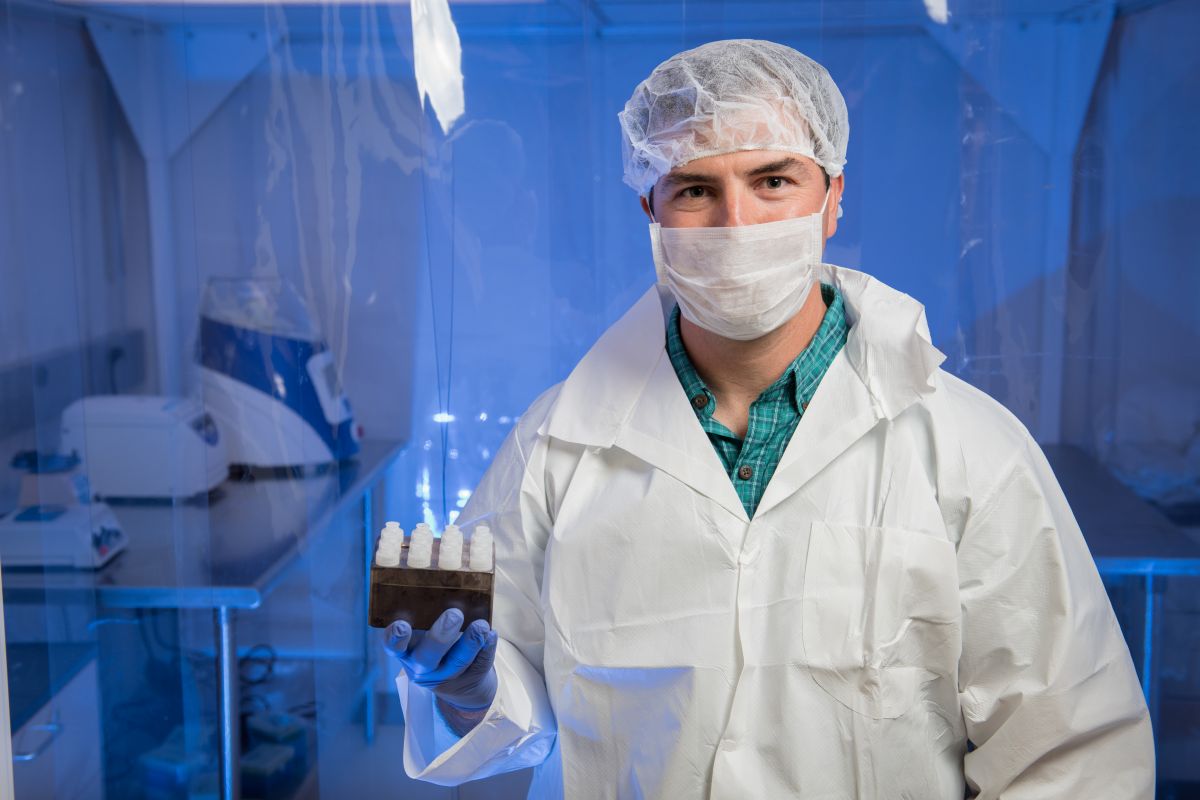
Earlier this semester, the National Science Foundation (NSF) announced $39.9 million in awards to universities across the country as part of the Established Program to Stimulate Competitive Research (EPSCoR) Research Infrastructure Improvement Program. From the total, the NSF awarded $6 million to a project lead by UAA’s Brandon Briggs, Ph.D., professor of biological sciences, titled Transformative Bioprocessing and AI-Driven Frameworks for Sustainable Critical Mineral Recovery.
Briggs aims to use microbes to recover rare-earth elements (REEs) from samples of coal refuse — the leftover material from coal processing. The project is a collaboration between experts at UAA, University of Alaska Fairbanks, Montana Technical University and University of Wyoming. Briggs is joined on the project by UAA College of Engineering’s Subhabrata Dev, Ph.D., Masoumeh Heidari Kapourchali, Ph.D., and Mohammad Heidari Kapourchali, Ph.D.
“For a decade, we've worked to develop this biotechnology. Seeing it become a funded, multi-state effort is incredibly rewarding,” said Briggs. “I see this as a culmination of the last 10 years of research, of slowly building up, identifying different types of microbes that can do this, and building up this consortium.”
Building an environmentally friendly approach
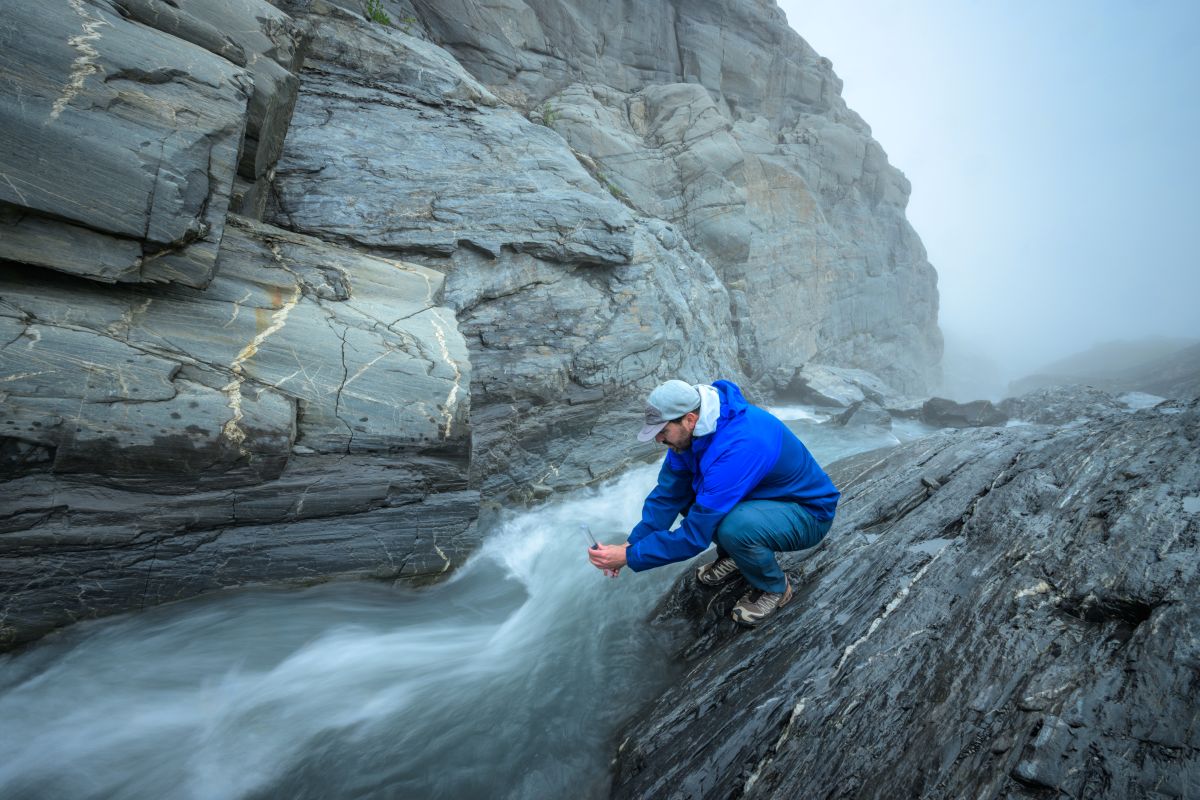
REEs are a group of 17 transition metals on the periodic table of elements and are essential for manufacturing many modern electronic devices, making access to REEs a top economic and national security concern. Extracting these metals from rare-earth ores typically involves the use of strong acids to dissolve the ore, though this is an expensive process with potential environmental impacts.
“The rare earths are not rare, to be honest. They’re found everywhere. They’re rare in that they’re usually not found in high-enough concentrations to be economically viable,” explained Briggs. “What we need is viable methods to concentrate them from very dilute sources. Typically right now you have to use strong acids, high temperatures and solvent extraction processes that can take 200 steps.”
Briggs believes his team can reduce the number of steps required to “four or five” with the funding available through the grant. The team plans to use microbes to break down coal refuse, leaving behind high concentrations of REEs, in a process that will be more sustainable than current approaches. Members of the Briggs Lab have collected samples of microbes living in extreme environments — like glacial meltwaters — over the last several years. Recent excursions include the lab’s 2022 trip to collect microbes at Worthington Glacier and a 2024 expedition to Grewingk Glacier.
“We’re hoping that we can make an actual impact and be a sustainable process,” said Briggs. “The U.S. relies heavily on foreign processing for rare earth elements, even though REE-bearing coal refuse and ash sit untapped at home.”
Achieving scale with the help of AI
The team is using an AI deep-learning model to analyze data during the project to optimize results, with Masoumeh Heidari Kapourchali leading the model’s development. While the Briggs Lab has had success before using microbes to extract REEs from coal, the process has not been able to be scaled up to be commercially viable. The deep learning model will analyze aspects of how the microbes develop in a bioreactor with the coal samples, including parameters like temperature, acidity, salinity, oxygen composition and more.
“Instead of having to go through months, if not years, of research on trying to optimize the process, using this predictive power we can quickly say, ‘No, this feedstock is not going to work,’” explained Briggs. “The machine learning process will identify when that reactor's going to fail and what sort of corrective processes we could do to make sure it doesn't fail. That should help us quickly accelerate the scale-up into something that's economically viable.”
 "Briggs Lab awarded $6M NSF grant for biomining, AI project" is licensed under a Creative Commons Attribution-NonCommercial 4.0 International License.
Recommended Stories
Briggs Lab awarded $6M NSF grant for biomining, AI project
 Be a good friend, not a serial killer: UAA WWAMI alumnus donates book proceeds to classmate’s memorial scholarship
 A practical guide to assessing children’s mental health
 UAA awarded grant to launch Alaska Veterans Memorial Project
 ‘Voting is community care’