






College of Health students bring applied public health research to Alaska’s statewide stage
by Alison Miller |
When Alaska’s public health community gathered in Anchorage for the 2026 Alaska Public Health Association Annual Health Summit, students from the University of Alaska Anchorage College of Health were not just in attendance. They were helping lead the conversation.
The annual conference, which took place Jan. 20-22, 2026, aims to bring together public health professionals from across the state to share research and ideas. Across three days, professionals from across the academic, public, and private sectors – including several UAA faculty – convened at the Dena’ina Convention Center in downtown Anchorage to discuss ways to strengthen the state’s public health network.
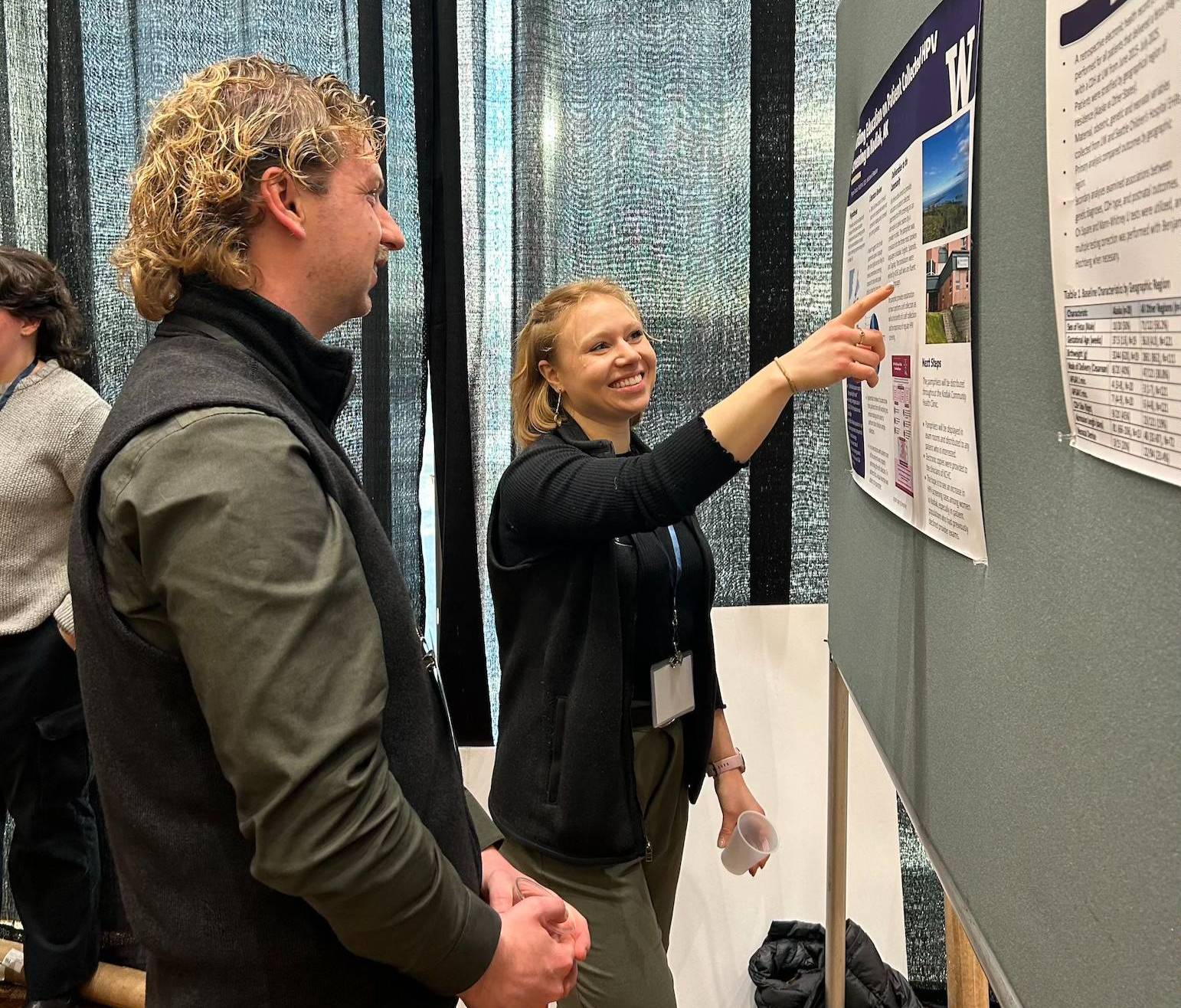
On Wednesday, Jan. 21, they were joined by twelve students from the College of Health. The students included graduate and undergraduate students from the Division of Population Health Sciences graduate public health programs and undergraduate Bachelor of Science in Health Sciences (BSHS programs, as well as medical students in the WWAMI School of Medicine. Each was there to present a poster representing public health research they had completed as part of their degree program. Members of the ALPHA board of directors and summit planning committee would act as judges for the poster session, and attendees were encouraged to vote on the one they liked best.
Shortly before the beginning of the poster session, Dr. Eduardo Piqueiras, Assistant Professor in the Division of Population Health Sciences and Graduate Program Chair, joined a few of the presenters at a nearby table for a pep talk.
“Remember that you know more about your topic than anyone else in the room,” said Dr. Piqueiras. “Just start with the story of what led you to your topic and why you think it’s important. And if they ask hard questions,” he added with a smile, “just tell them that you look forward to exploring that idea in your next project.”
Dr. Travis Hedwig, Assistant Dean of the Division of Population Health Sciences and Associate Professor, was also involved in coordinating the poster session, sponsoring student attendance with support from the Division, and served on the planning committee for the summit itself. “The Division of Population Health Sciences (DPHS) and College of Health’s (COH) involvement with the Alaska Public Health Association (ALPHA) creates vital links between academic learning, research, and public health practice,” said Dr. Hedwig. “By engaging with ALPHA’s statewide network, our students and faculty turn knowledge into action, advancing community well-being, promoting programmatic and systems innovation, and strengthening Alaska’s public health workforce.”
Advancing the conversation around Alaska's public health landscape
Students’ work covered a wide range of topics, from food security to environmental contamination, many of which addressed everyday impacts on the lives and health of Alaskans. Presenters and their project titles are listed below:
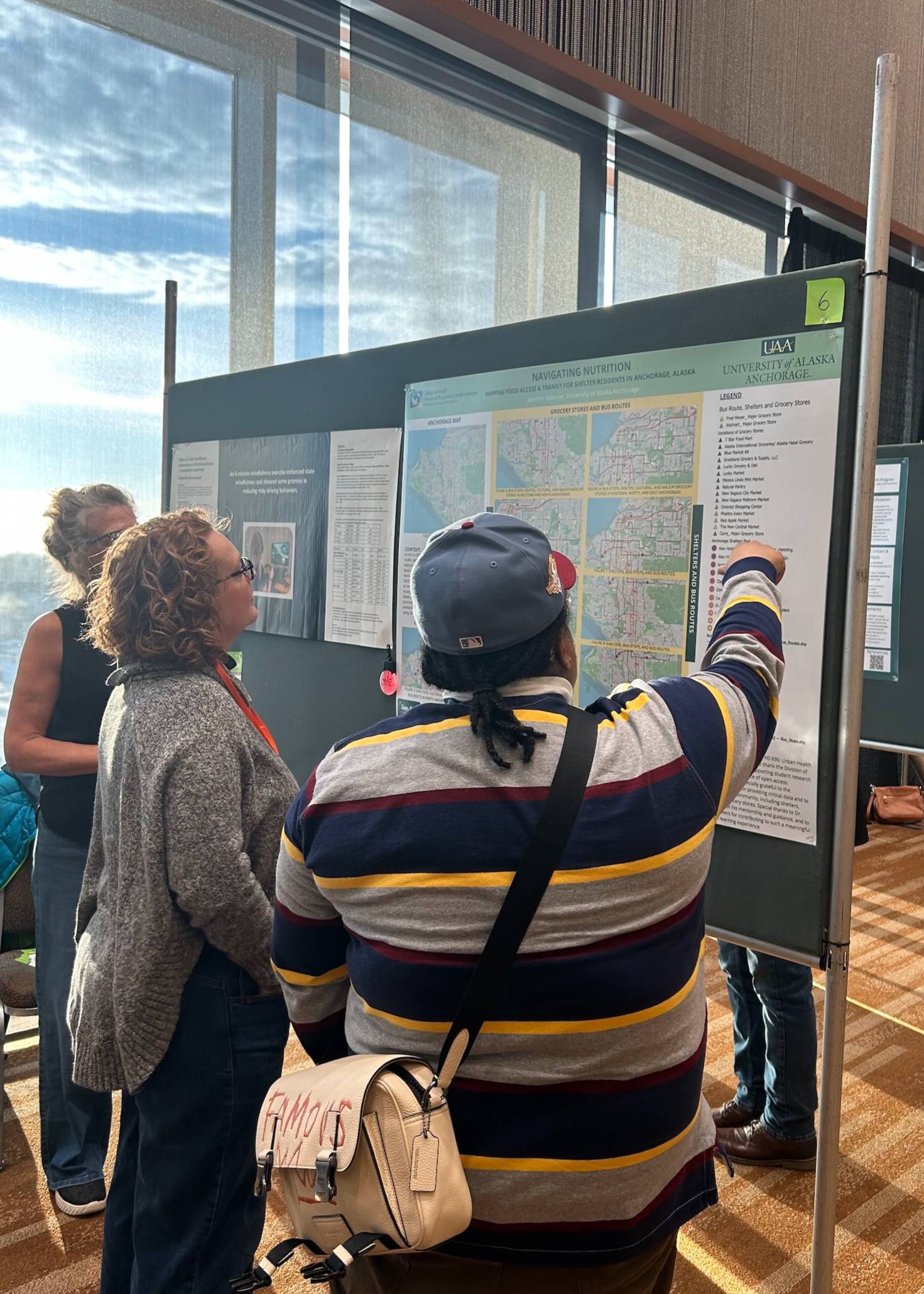
- Jennifer Spencer (Master of Social Work (MSW) and MPH graduate student): “Mapping Food Access and Transit for Shelter Residents in Anchorage, Alaska.”
“Being able to have access to food is important – we need food to survive and thrive. But another important component to this is culture. Being connected to your culture, even though you’re experiencing food insecurity or homelessness, helps to build resilience. Navigating food access is important to building resilience and dignity at a time when individuals may not feel that they are being seen or treated as human beings. Food connects us on that level.” - Jennifer Spencer
- Keely Livingston, MPH graduate student: “Transportation Barriers to Food Bank Access in Palmer, Wasilla, and Surrounding Areas.” [First Place Winner]
“Working with food pantries in Mat-Su to provide nutrition education spurred my interest in understanding transportation barriers to food bank access. Transportation barriers are a significant concern among Mat-Su stakeholder groups in ensuring access to fresh, local foods, especially in outlying areas of Mat-Su. The goal with this poster was to bring more community members into the conversation surrounding food insecurity in Mat-Su. These connections are invaluable to inspiring change with public health and community-led initiatives to increase food security. I hope this project continues to foster these community conversations and bring actionable initiatives to the table.” - Keely Livingston
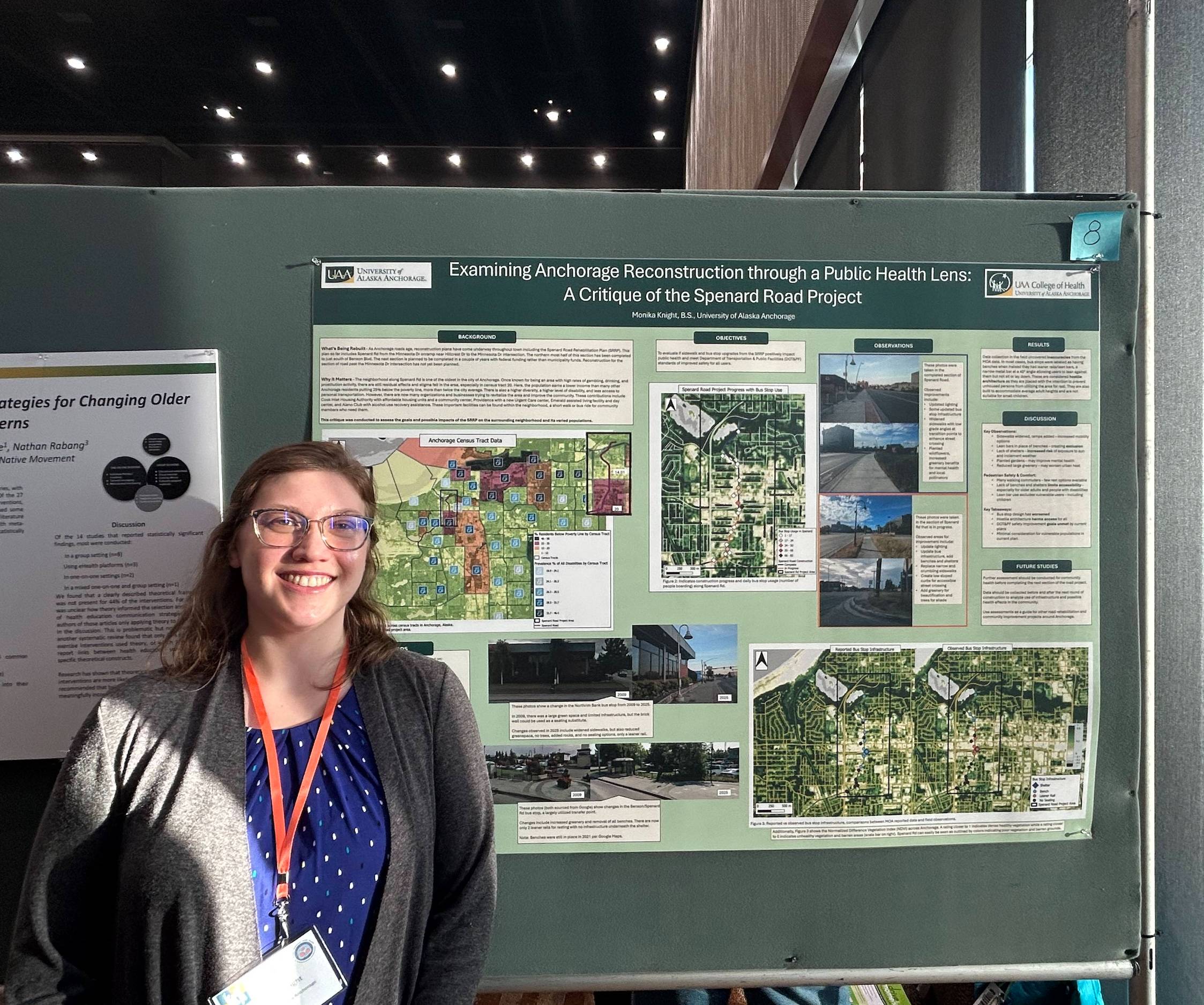
- Monika Knight, BSHS Alumni & incoming MPH graduate student: “Examining Anchorage Reconstruction through a Public Health Lens: A Critique of the Spenard Road Project.” [People’s Choice Award]
- Ashley Ihde, MPH graduate student: “Identifying Vulnerable Neighborhoods: Arsenic Risk and Private Wells in Anchorage, Alaska.” [Third Place Winner]
- Carie Eastaugh, MPH graduate student: “Per- and Polyfluoroalkyl Substances (PFAS) Contamination in Anchorage: Spatial Risk Pathways and Vulnerable Populations.”
“I got very interested in environmental health issues, specifically environmental determinants and how they impact our health. PFAS – otherwise known as ‘forever chemicals’ – has been around for quite some time, but it’s really an invisible risk because it’s not something people can see. When I started to look at airports – which have historically used aqueous firefighting foams that contain a lot of PFAS – I wanted to determine what this actually looked like in surrounding areas, and how much risk there was around the Anchorage airport. It turns out we have watersheds that overlap the Anchorage airport boundaries, and we have known PFAS contamination sites at the airport. So when you start to look at water risk, Spenard and Lake Hood are some of the most contaminated lakes in the state that have been tested. We have Hood Creek that runs towards the Cook Inlet, so we may be mobilizing PFAS into the inlet. We also have a lot of elementary schools in this area, and I don’t know that anyone has ever tested the soil that the kids are playing in. I really hope that this work raises awareness of the potential risk around having this in our community and where vulnerabilities might lie.” - Carie Eastaugh
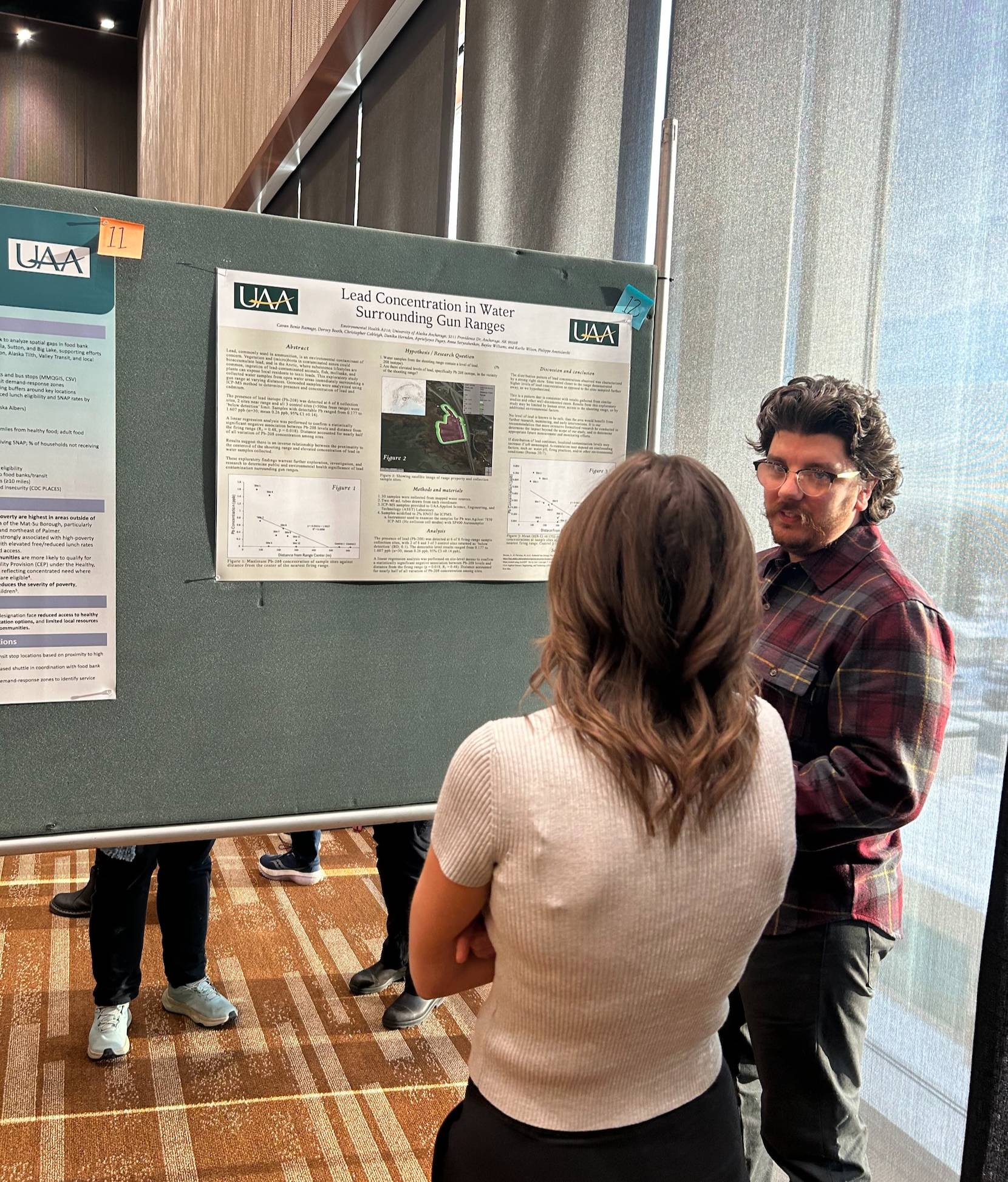
- Cavan Benio Ramage, Dorsey Booth, Christopher Cobleigh, Danika Herndon, Aprieljoyce Pugay, Anna Seryozhenkov, Baylee Williams, and Karlie Wilson, undergraduate Health Sciences students: “Lead concentration in Water Surrounding Gun Ranges.”
- Abigail Crawford, WWAMI medical student: “Rural Health Care Providers’ Attitudes on Climate Change in the Northwest United States.”
- Kyle Stone, WWAMI medical student: “In-hospital Vascular Surgery Consultation and Complete Follow-Up after Acute Type A Aortic Dissection: A Care Pathway that Improves Surveillance and Survival.”
- Peyten Schultz, WWAMI medical student: “Providing Education on Patient-Collected HPV Screening in Kodiak, Alaska.”
- Eleanor Lo Re, WWAMI medical student: “Community Health Aide Respiratory Illness Triage Tool in Bethel, Alaska.” [Second Place Winner]
- Jack Ketelsen, WWAMI medical student: “Congenital diaphragmatic hernia trends and outcomes at the University of Washington: a retrospective cohort study.”
In addition to the student presenters, College of Health faculty and staff were well-represented at the ALPHA Summit. Dr. Jay Butler, the newly appointed dean of the College of Health, gave a keynote presentation titled “Public Health 2025-2027 and Beyond” on the first day of the conference. He was one of more than a dozen speakers from the College of Health who also presented their own work at the conference.
Moving forward in the world of public health
For students, participation in conferences like the ALPHA Summit offers more than professional development. It provides an opportunity to situate their work within Alaska’s broader public health system and to see how research, policy, and practice intersect in real time.
“These experiences matter because they show students that knowledge is built through conversation and shared responsibility,” Piqueiras said. “Presenting their work helps students step into the public health community and begin finding their own voices.”
That sense of responsibility resonated strongly with students, particularly those planning to work in Alaska. Kyle Stone, a WWAMI medical student, emphasized the value of bringing research back to local communities.
“Presenting at an Alaska conference means a lot,” Stone said. “It gives us a chance to take what we have learned, whether in Anchorage, rural Alaska, or outside the state, and focus it back on improving health where we live.”
As Alaska continues to navigate evolving public health challenges shaped by geography, climate, infrastructure, and culture, the College of Health’s presence at the ALPHA Summit reflected a broader commitment to preparing students not only for careers but for meaningful engagement with the communities they serve.