








College of Health faculty leads the way in FASD prevention through nurse education
by Alison Miller |
Dr. Corrie Whitmore, an associate professor in the Division of Population Health Sciences, and her team at UAA’s Center for Behavioral Health Research and Services are celebrating the recent publication of a new article, “Facilitating Culturally Safe Conversations Around Substance Use Disorder and Contraception to Provide Inclusive Care for Neurodiverse and Neurotypical Populations.” The paper, which was published in the Dec. 2025 issue of Nursing for Women’s Health, offers a framework and actionable strategies for nurses to improve communication and patient experience in discussions around substance use and contraception.
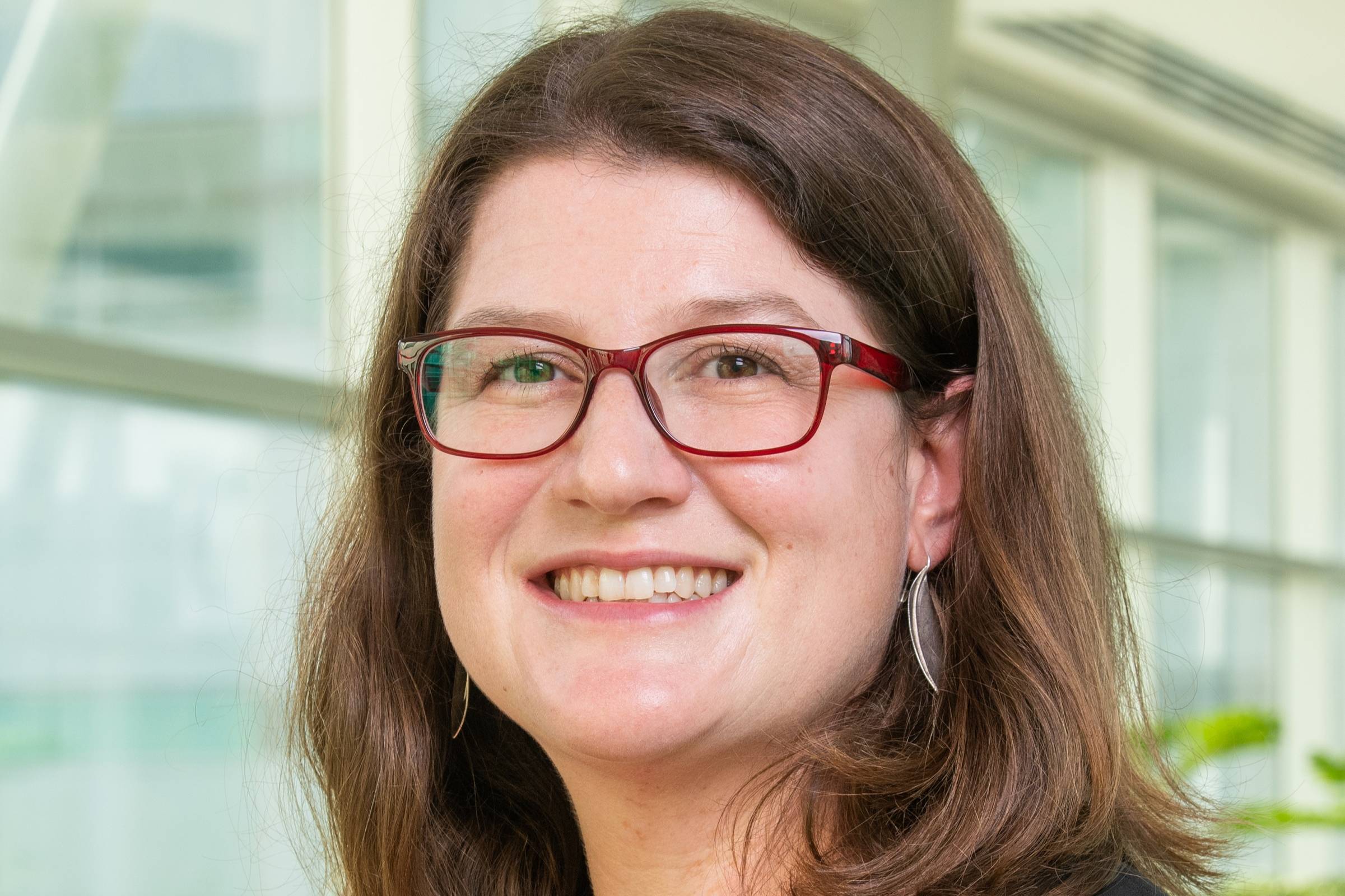
For Whitmore, this publication is another step toward untangling the complicated knots at the intersection of Fetal Alcohol Spectrum Disorders (FASD) and patient-provider relationships. Currently, she and the rest of the Women’s Health Nurses and Midwives Collaborate for Alcohol-Free Pregnancy (WHNMCAP) team – which is a collaboration between UAA’s Center for Behavioral Health Research and Services, the Centers for Disease Control and Prevention (CDC), the Association of Women’s Health, Obstetric and Neonatal Nurses (AWHONN), and the National Association of Nurse Practitioners of Women’s Health (NPWH) – are working to prevent substance use during pregnancy by leveraging the nurse-patient relationship. “A lot of times, what we hear from nurses is that they want to be helpful to their patients, they want to be effective in addressing these topics, but they don’t know how, or they don’t feel comfortable starting the conversation,” said Whitmore. “They don’t know where to start or what to say. How do you do something that creates safety and moves forward?”
That’s the riddle that Whitmore and the WHNMCAP team, headed by principal investigator Dr. Diane King and project manager Alexandra Edwards, are trying to solve: how to equip nurses to handle difficult conversations around pregnancy and substance use with patients who may be reluctant to disclose certain risk factors or behaviors due to fear of judgment. Realizing the need for concrete guidelines that nurses could apply in their day-to-day work environments, the team created a series of trainings and piloted them at several conferences, where they received encouraging feedback. Their recently published article describes the strategies from this training and contextualizes them within a theoretical framework. Now, they’re partnering with several national nursing organizations – including AWHONN and NPWH – to more widely deploy those continuing education resources, with the hope that nurses who use them will feel more confident in approaching sensitive situations and ultimately be able to provide better care to their patients.
“We’ve realized that, as a field, if you can help nurses and other clinical staff understand why this is important and what specific actions they can take, and give them the tools they need, you can really impact the health of the population,” said Whitmore. She was quick to add that other clinical professions and providers also have an important role to play in facilitating these conversations; their project just happens to focus on nurses. In particular, Whitmore and her team target nurses who work in women’s health contexts – for example, obstetrics and gynecology (OB/GYN) offices, or family health settings. Since many doctors have busy schedules and full patient loads, nurses and other clinical professionals are likely to spend the most time with patients.
Although their work has the potential to help nurses and patients everywhere, it’s especially relevant in Alaska, where providers and patients alike face unique challenges. “Patients may come to a clinical setting and expect to be judged or treated carelessly, or be worried about being harmed,” said Whitmore. “We know that there are real health disparities around who is most likely to die in childbirth, and who gets adequate prenatal care and access to different kinds of birth control. Nurses want to do well by their patients, but it can be pretty stressful. You don’t want to say the wrong thing, you don’t want to make it worse.” Whitmore noted that Alaska has an above-average rate of substance use compared to other states. “We know that the need is here.”
In addition to having a healthcare landscape that is complex and culturally diverse, Alaska’s healthcare workforce is characterized by a high proportion of out-of-state providers and workers. Whitmore said, “We have some Alaska-specific cultural contexts here, and a lot of folks coming in from outside of Alaska don’t necessarily understand the nuances of working in rural areas or remote communities, working with Indigenous communities, or working in communities as diverse as Anchorage.” Notably, the College of Health is actively working to create more opportunities for Alaska residents to receive in-state education and training, with the ultimate goal of expanding the state’s healthcare workforce. Those efforts will take time, though, and in the meantime, “trainings and frameworks like this one, which focus on navigating cultural safety, can help people learn the skills they need in a new context, or in a different cultural context,” said Whitmore.
While there’s much more work to be done, Whitmore and her team’s efforts are already gaining traction and attention. Their work was also highlighted in a recent article published by FASD United, an organization dedicated to raising awareness about FASD and providing education and resources to families affected by it. Whitmore, for her part, is both hopeful and excited to see what’s next. For her, this project is meaningful not only for its potential to reduce future FASD cases but also for the impact it can have on nurses and patients now: helping nurses feel more confident in their care and making patients feel safe and heard in clinical settings. Whitmore said, “Ensuring that providers can have conversations about substance use, contraception, and pregnancy in a way that facilitates disclosure and shared clinical decisionmaking, and empowers patients to make choices about their substance use and pregnancy – that’s really powerful.”