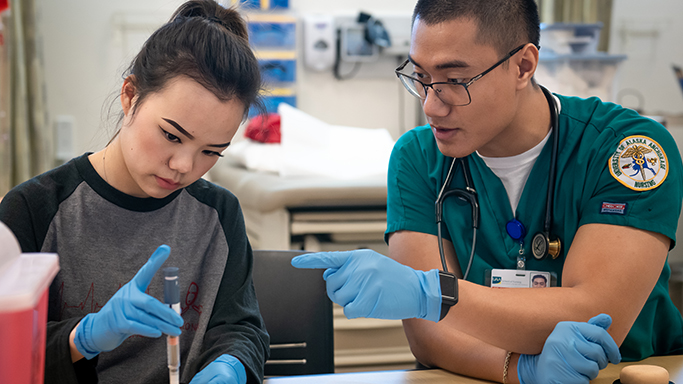
The Division of Population Health Sciences (DPHS) prepares students to confront the
root causes of health challenges in Alaska and across the circumpolar North. Through
a blend of education, research, and community partnership, DPHS empowers students
to create lasting change in population health and to lead efforts that strengthen
the well-being of communities statewide and beyond.
Programs in the Division of Population Health Sciences
Unlike clinical care, which focuses on individuals, population health looks at the
big picture—improving health outcomes across communities through policy, prevention,
and systems-level solutions. It includes:
Public Health: Promoting wellness, preventing disease, and advancing health equity.
Community Health: Strengthening local environments and connecting people to care and
resources.
Join us to make an impact that goes beyond treating illness to help build healthier
communities from the ground up.
ACADEMIC PROGRAMS
Meet the public health challenges of an aging society, including providing competent
care in medical settings and essential community resources and end-of-life support.
Set up a successful career in health education and health promotion, public and community
health, disease prevention, rehabilitation, or health care delivery.
Rural Alaskan communities are seeking grant funding to address health risks related to climate change. Associate Professor Micah Hahn from the Institute of Circumpolar Health Studies spoke to Alaska Public Media about her team’s efforts to help communities create climate adaptation strategies.
Alaska is prepared to handle harsh winter weather, but climate change has triggered a new threat – heat. Micah Hahn with the Institute for Circumpolar Health Studies (ICHS) is teaming with the National Oceanic and Atmospheric Administration’s Alaska branch to develop the state’s first hot weather warning system based on the local temperature threshold.
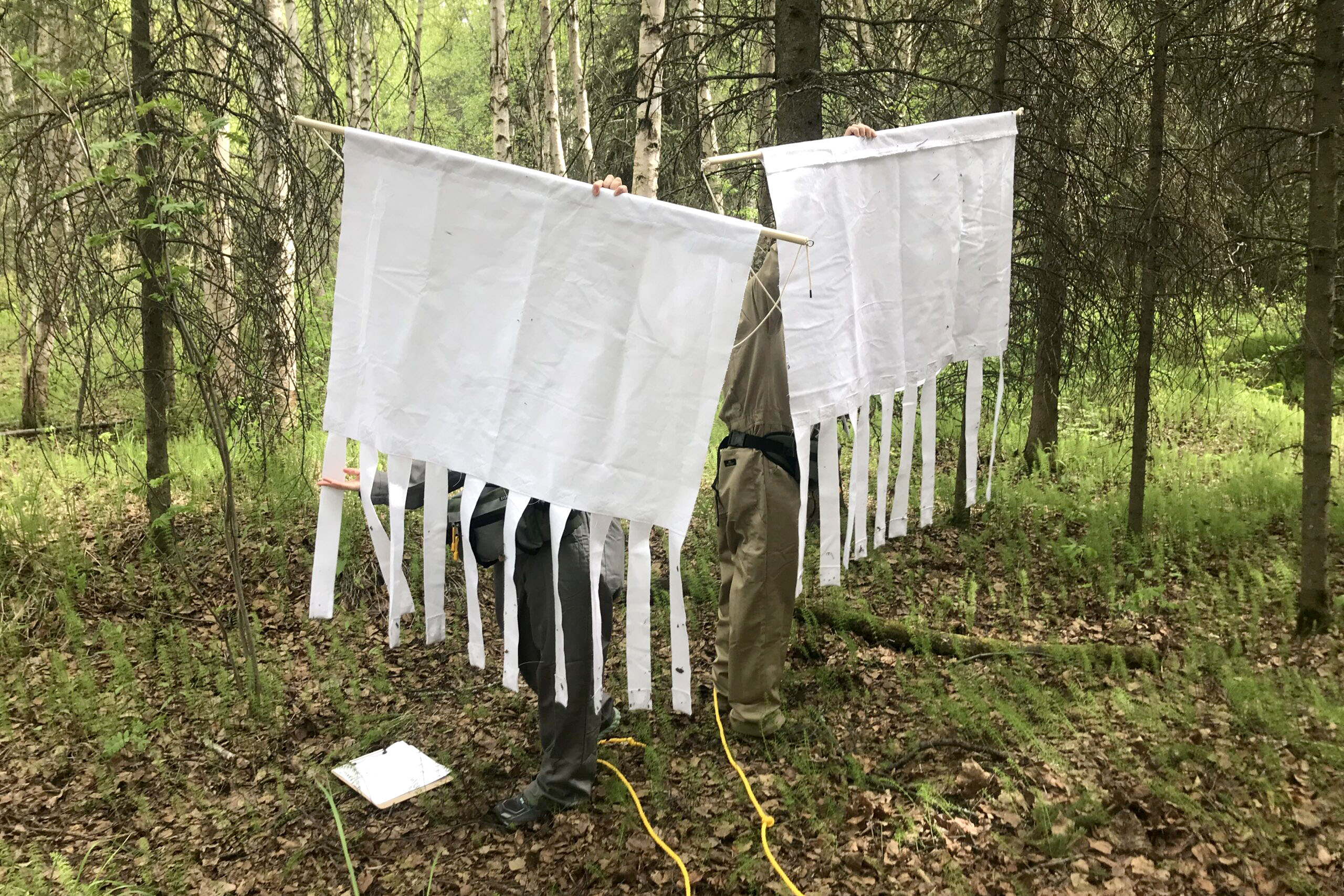
Historically, ticks haven’t been a problem in Alaska. But factors like climate change and tourism have created a welcoming environment for new species that can transmit illnesses to humans. Micah Hahn with the Institute for Circumpolar Health Studies is tracking them. “Our work over the past six years is to understand the baseline–where we are with the ticks that exist in Alaska.”
UAA Associate Professor of Environmental Health Micah Hahn is leading a research project around climate change, health, wildfire smoke and environmental justice in Alaska that recently received a $1.3 million grant from the U.S. Environmental Protection Agency (EPA).
According to results from research led by Micah Hahn, an environmental epidemiologist here at UAA, Alaskans' health starts suffering when temperatures climb to 70 degrees, and that local and state officials should consider policies to respond to heat-related health problems that are expected to increase as the climate continues to warm.
Researchers in our lab are working to solve the global plastic pollution problem by
developing insulation that is recyclable, reusable, and biodegradable.
Housed under the Office of Research, ICHS partners closely with us while conducting applied research that supports public health
and offers valuable research experience for students.