




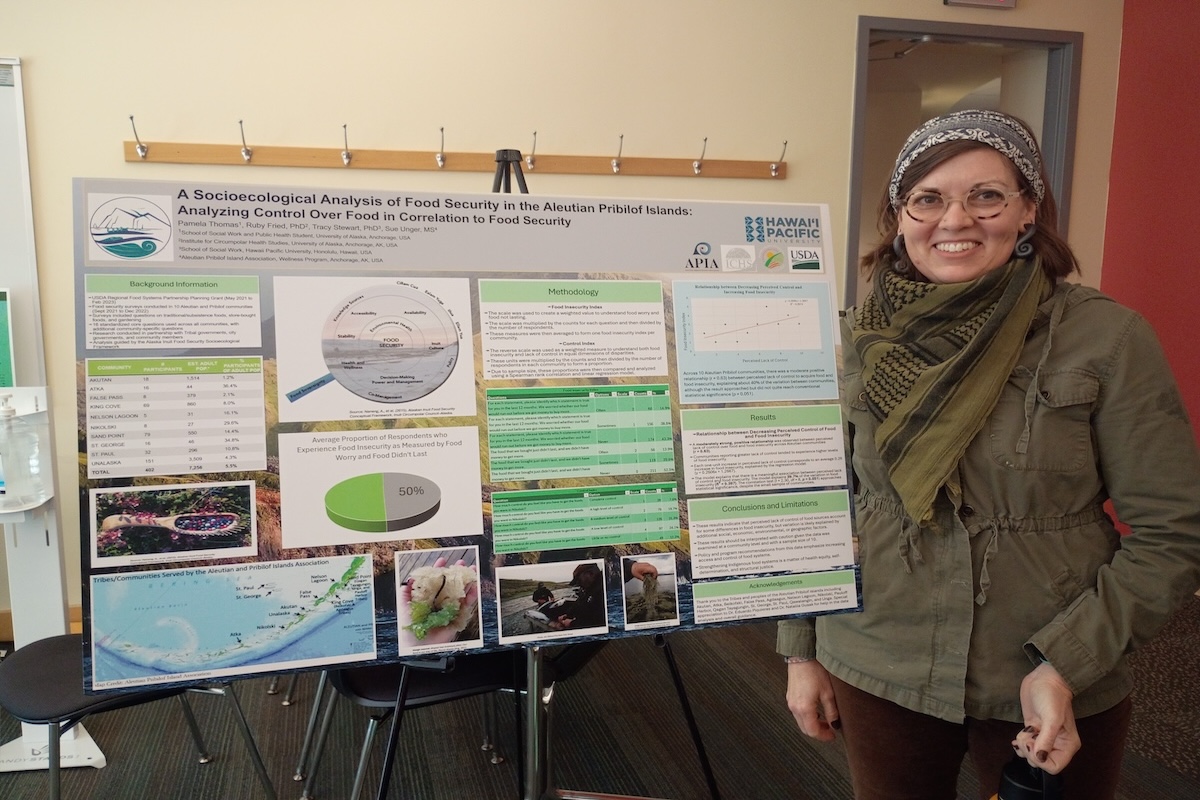
Student Spotlight: Pamela Thomas - on connecting research, community, and health
For Pamela Thomas, health begins with connection--connection to family, community, culture, land, and the systems that shape our everyday life.
For Pamela Thomas, health begins with connection--connection to family, community, culture, land, and the systems that shape our everyday life.
Micah Hahn associate professor for the Institute of Circumpolar Health recently discussed research she co-authored examining preterm births in Alaska.
Rural Alaskan communities are seeking grant funding to address health risks related to climate change. Associate Professor Micah Hahn from the Institute of Circumpolar Health Studies spoke to Alaska Public Media about her team’s efforts to help communities create climate adaptation strategies.
Alaska is prepared to handle harsh winter weather, but climate change has triggered a new threat – heat. Micah Hahn with the Institute for Circumpolar Health Studies (ICHS) is teaming with the National Oceanic and Atmospheric Administration’s Alaska branch to develop the state’s first hot weather warning system based on the local temperature threshold.
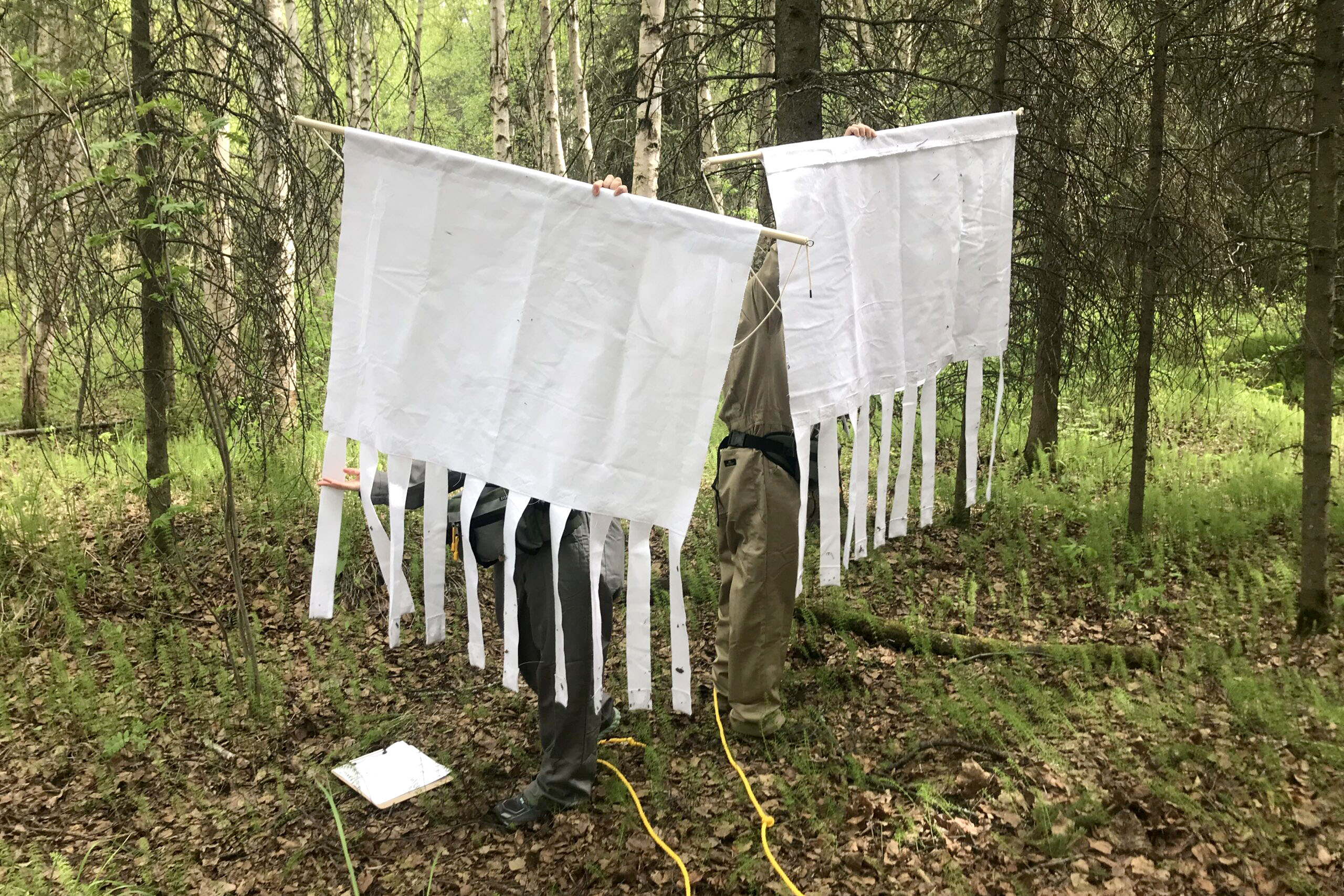
Historically, ticks haven’t been a problem in Alaska. But factors like climate change and tourism have created a welcoming environment for new species that can transmit illnesses to humans. Micah Hahn with the Institute for Circumpolar Health Studies is tracking them. “Our work over the past six years is to understand the baseline–where we are with the ticks that exist in Alaska.”

CATEGORIES
TAGS
ACADEMIC UNITS
PARTNER PROGRAMS
CENTERS & INSTITUTES
MEDIA INQUIRIES / STORY LEADS