The Division of Population Health Sciences (DPHS) prepares students to confront the
root causes of health challenges in Alaska and across the circumpolar North. Through
a blend of education, research, and community partnership, DPHS empowers students
to create lasting change in population health and to lead efforts that strengthen
the well-being of communities statewide and beyond.
Programs in the Division of Population Health Sciences
Unlike clinical care, which focuses on individuals, population health looks at the
big picture—improving health outcomes across communities through policy, prevention,
and systems-level solutions. It includes:
Public Health: Promoting wellness, preventing disease, and advancing health equity.
Community Health: Strengthening local environments and connecting people to care and
resources.
Join us to make an impact that goes beyond treating illness to help build healthier
communities from the ground up.
ACADEMIC PROGRAMS
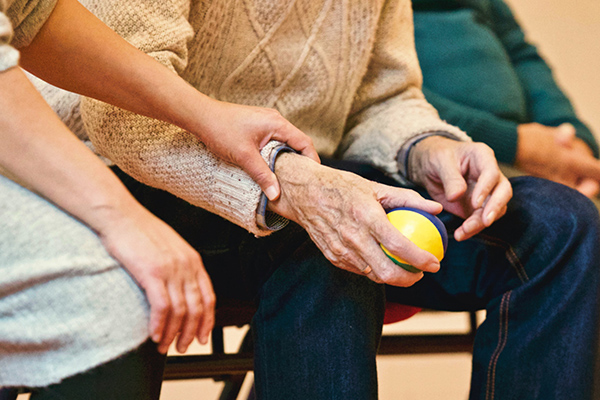
Meet the public health challenges of an aging society, including providing competent
care in medical settings and essential community resources and end-of-life support.
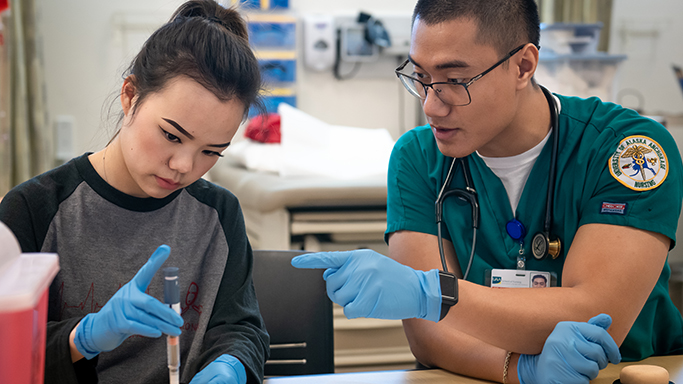
Set up a successful career in health education and health promotion, public and community
health, disease prevention, rehabilitation, or health care delivery.
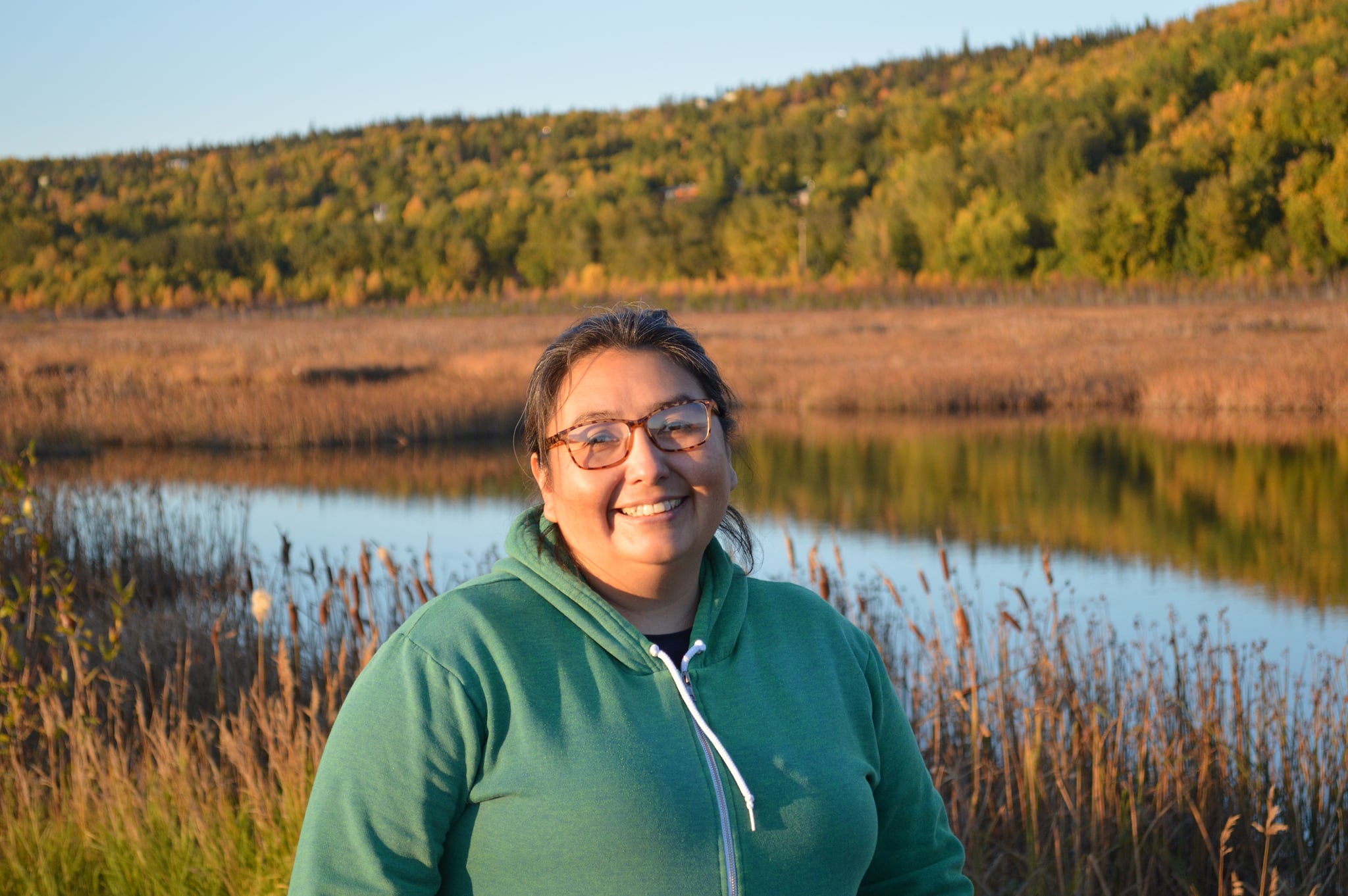
Vanessa Hiratsuka from CHD and Britteny Howell from DPHS are the new Co-Directors for UAA’s National Resource Center on Alaska Native Elders. Vanessa Hiratsuka shares her hopes for the center’s future.
Vanessa Hiratsuka from CHD and Britteny Howell from DPHS are the new Co-Directors for UAA’s National Resource Center on Alaska Native Elders. Britteny Howell shares her journey into geriatrics.
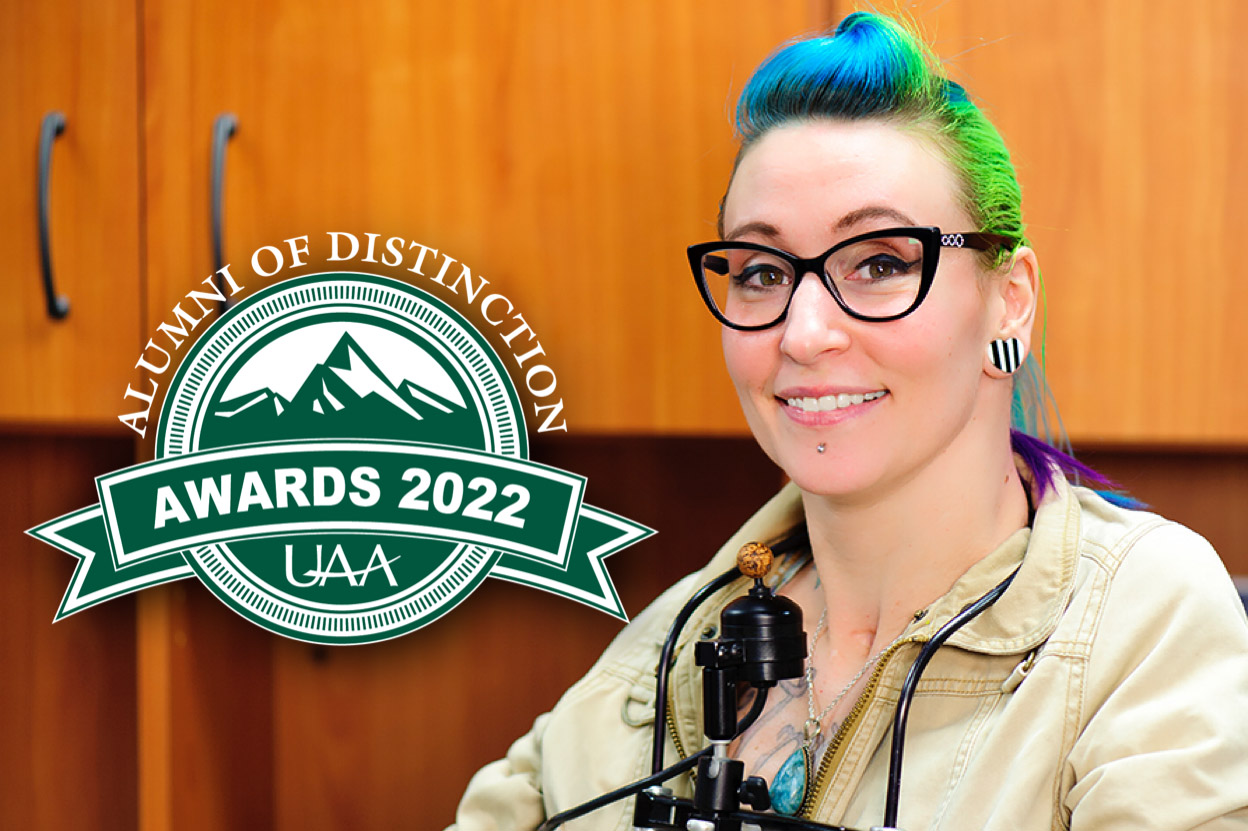
One morning in 2005, psychology alumna Maggie Winston — then a 21-year-old hairdresser and mother of twin boys living in Kenai — woke up feeling cramps between her shoulder blades. Within an hour, she couldn’t walk.
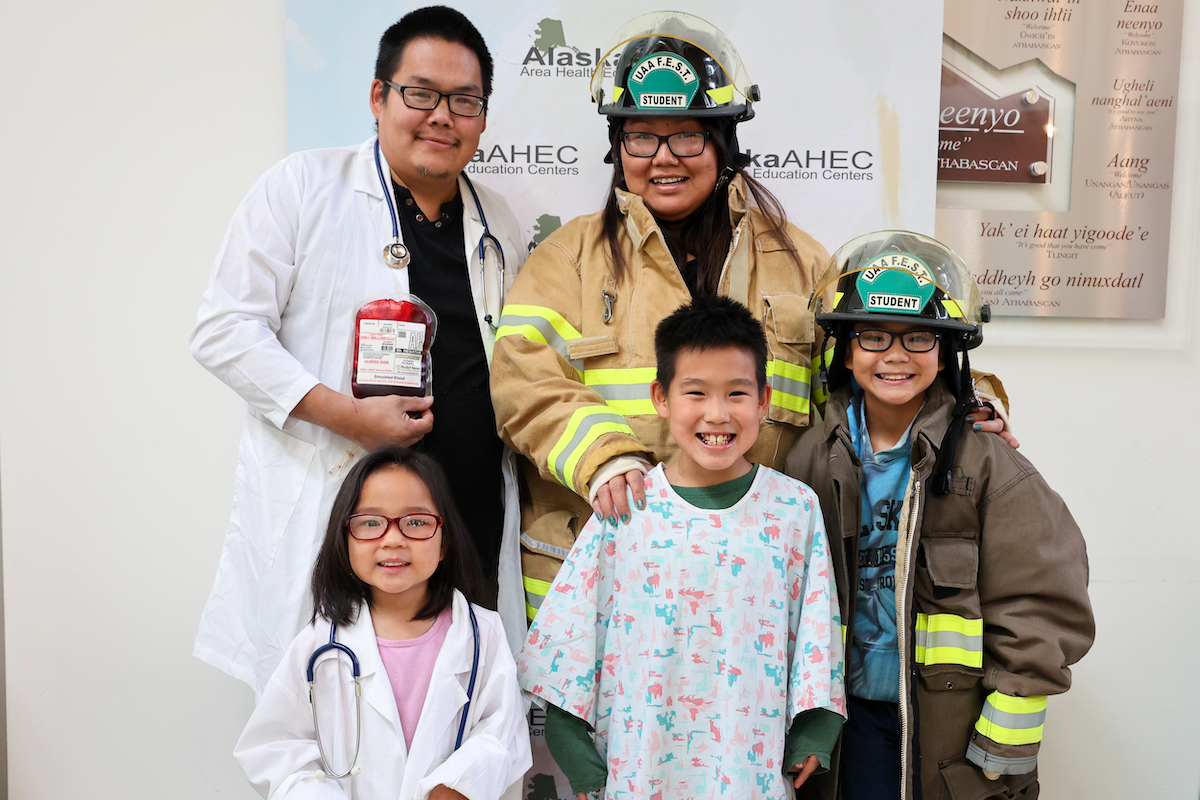
After a two-year hiatus, UAA STEM Day returned to campus on October 1, drawing over 1,500 community members to the ConocoPhillips Integrated Science Building to celebrate Science, Technology, Engineering, and Mathematics, commonly known as STEM. Attendees, primarily children, enjoyed activities, challenges, demonstrations, tours, and planetarium shows that explored a wide range of STEM topics from biology to robotics.
More than two years into the pandemic, vaccines are widely available and most health measures have been lifted. But there are still Alaskans who have difficulty accessing vaccines or who have continued health risk in spite of them. Sondra LeClair, Health Projects Coordinator, UAA Center for Human Development, discusses vaccine access for individuals with disabilities in Alaska.
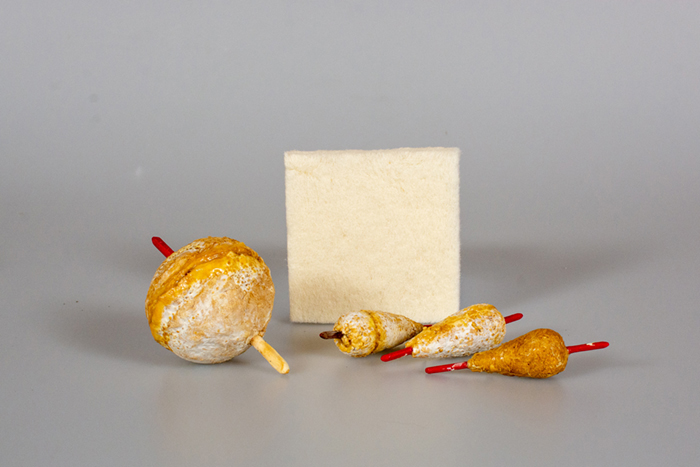
Researchers in our lab are working to solve the global plastic pollution problem by
developing insulation that is recyclable, reusable, and biodegradable.
Housed under the Office of Research, ICHS partners closely with us while conducting applied research that supports public health
and offers valuable research experience for students.